EV Charger Installation in Medford, MA
Detached garages and long conduit runs
Medford is three different install markets inside one city, and the quote depends entirely on which part you are in. West Medford runs to Victorian houses on tree-lined streets between the Mystic River and Winthrop Street, most with a detached garage at the back of the lot, which means a fifty or sixty foot conduit run and a service that is frequently original. South Medford and the streets around Medford Square are denser two- and three-family stock closer to what Somerville looks like, with shared driveways and the routing questions that come with them. Wellington is a different job again: condominium towers on the Orange Line where the install is a board approval, a metering arrangement and a garage conduit route rather than a wiring problem. The one thing all three share is the filing. Medford takes electrical permit applications online only, which is straightforward once you know it and a wasted trip if you do not. Inspections are booked directly with the inspectors.
Permits filed online with the city
The area around Tufts University adds a pattern we see less of elsewhere, which is landlords installing charging for tenants rather than owners installing for themselves. That is a better-funded project than most people expect: MassEVIP covers charging at multifamily properties and the utility make-ready programmes pay for the infrastructure side, both filed before the work rather than claimed afterwards. Medford sits in Eversource territory, so the rebate and make-ready route matches Cambridge and Somerville. For owner-occupied houses the constraint is usually the same as in West Medford, an original service panel and a long run to a garage that was built for a single car and a workbench. Streets near the Middlesex Fells Reservation and up the hill toward the campus also mean cold, unheated garages, which affects the enclosure choice and how the unit behaves in a deep cold snap.
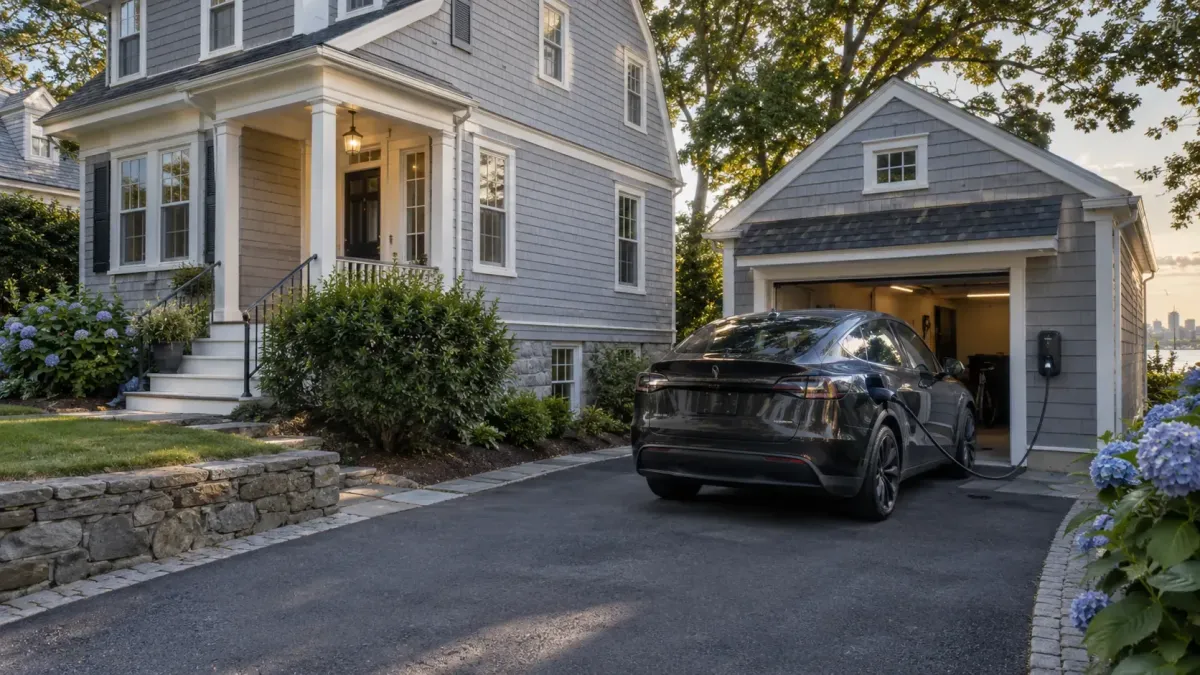
Victorian housing stock and original service
Commercial charging in Medford is mostly rental housing and campus-adjacent multifamily rather than retail parking. A landlord near Tufts University or a condominium board in Wellington is solving the same problem: several vehicles, one building service, and nobody willing to subsidise someone else's electricity. The design that works is shared infrastructure with metering that attributes consumption per vehicle, sized once for the eventual port count and phased as tenants arrive. Overnight parking makes load management viable, which usually removes the need for new service from Eversource. Funding matters more here than on an owner-occupied job: MassEVIP has a multifamily track and the utility runs make-ready programmes covering the infrastructure, and both are filed ahead of construction. We prepare that package with the load study. In a Wellington tower the conduit route through structured parking and the fire separation detail are the parts a board will ask about, so they go in the submission.
Charging for tenants rather than owners
Panel work in Medford divides along the same lines as the housing. West Medford Victorians often have an original service and a detached garage, so the calculation and the fifty-foot run land in the same quote and the conduit is frequently the larger number. Two- and three-family houses near Medford Square have the converted-building problem instead, where the house service carries every unit and the charger circuit has to be counted against all of it. Where an upgrade is the answer, the disconnect is coordinated with Eversource and the permit goes in through the city's online filing, with inspections booked directly. Where load management works, it avoids the meter change and suits a household charging overnight. Cold garages are worth mentioning at this stage too: a unit in an unheated space behind the house wants an enclosure specified for that, not for a basement.
Orange Line commuter buildings
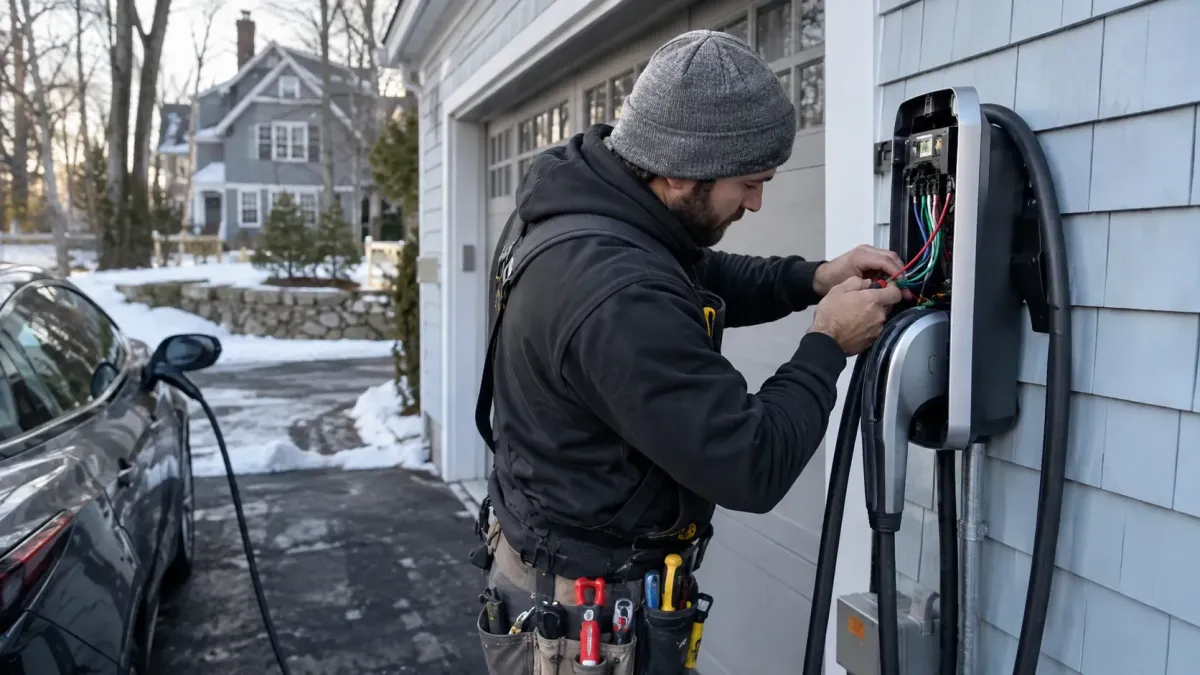
Repair work in Medford concentrates at the far end of long runs. A charger in a detached West Medford garage sits at the end of sixty feet of conduit, some of it buried or run along an exterior wall, and terminations at that distance are where heat and moisture show up first. Cold is the other factor: unheated garages up toward the Middlesex Fells Reservation swing through freeze-thaw cycles that loosen connections over several winters, and owners read the resulting slow charging as a dying unit. We test the supply under load and thermal-check both ends before assessing the hardware. In Wellington garages the pattern is different again, usually a networked unit that has lost its data connection and stopped reporting rather than stopped charging. That is a commissioning fix, not a repair, and it costs accordingly.
Comprehensive EV Charging Services in Boston
Tailored to Your Needs
Ten services, from a single garage circuit to a commercial lot. The install work splits by what the panel can carry and by who owns the parking. Repair and maintenance keep an existing charger delivering full current instead of quietly derating.
A load study decides how many commercial ports a building can actually carry.
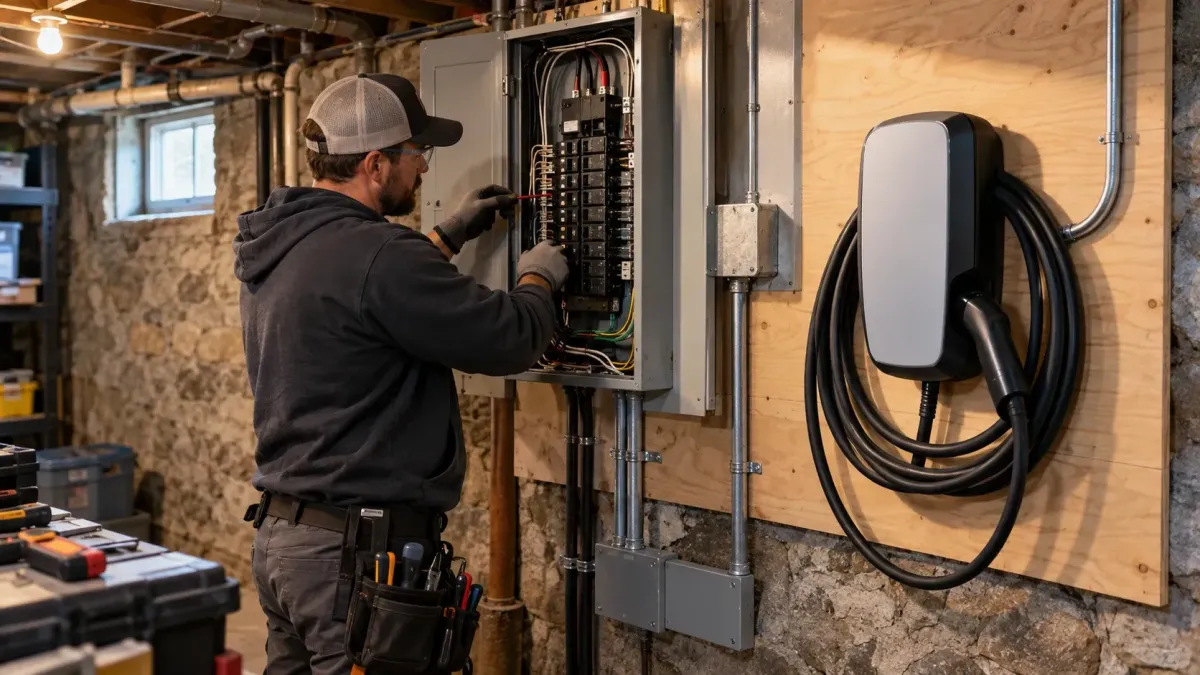
A load calculation decides whether the charger needs new service or a shared circuit.
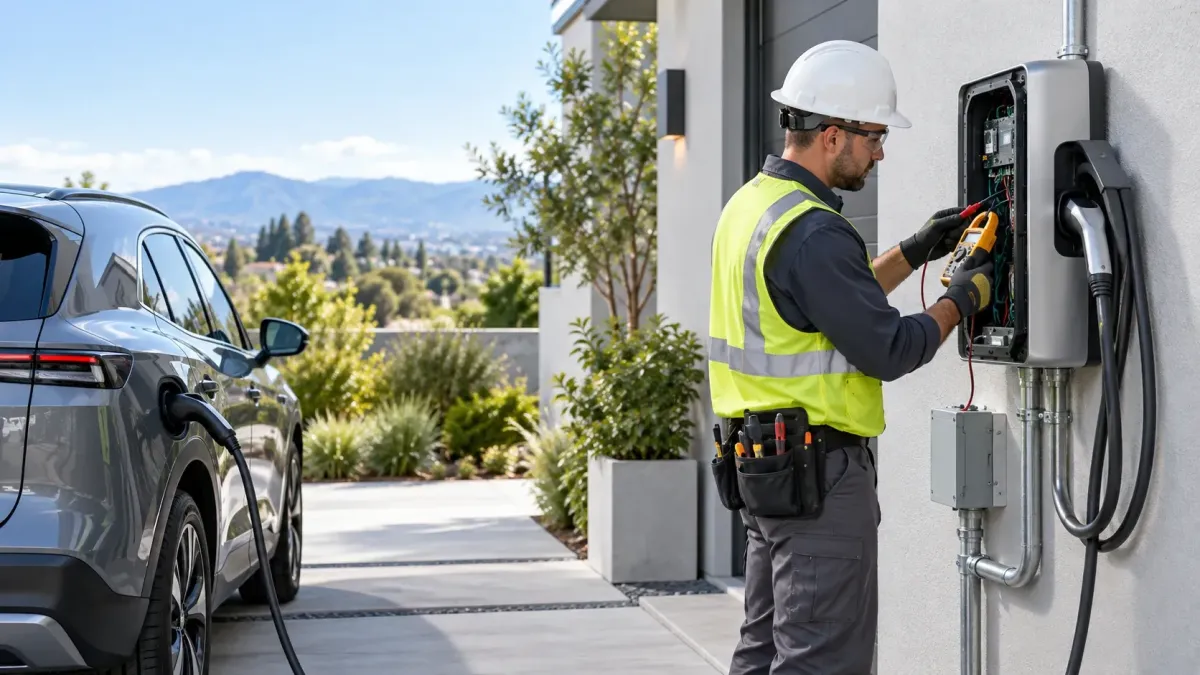
Diagnosis separates a charger fault from a circuit fault before anything gets replaced.
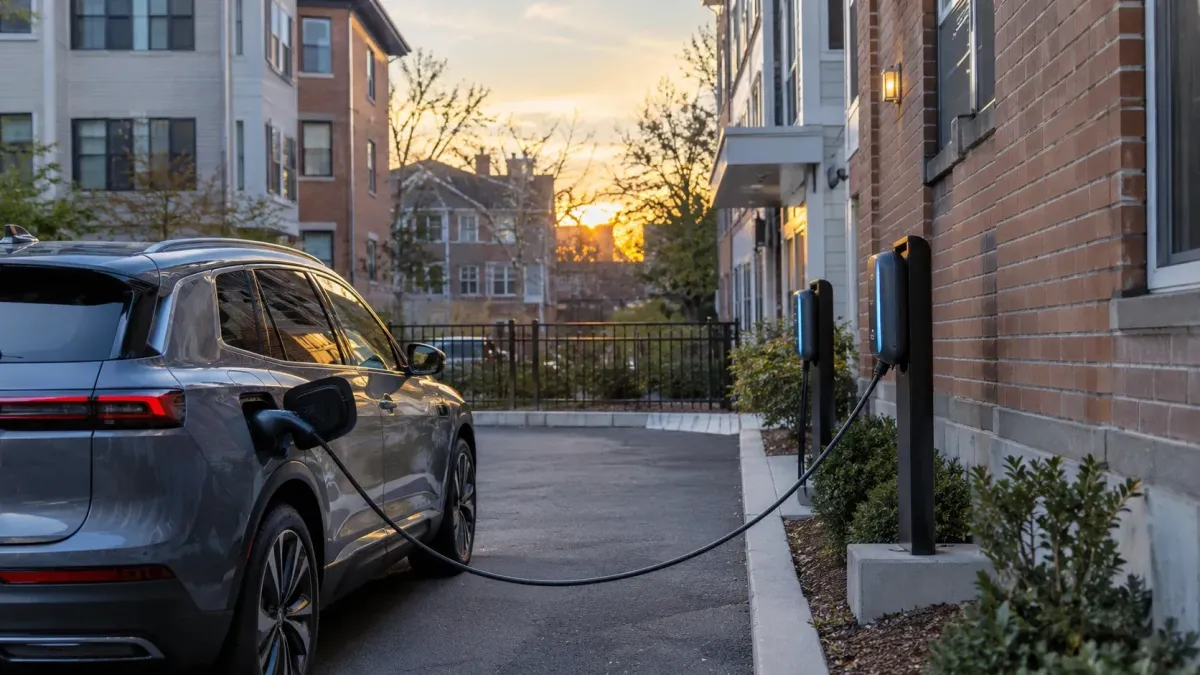
Board approval and metering decide a condo charger install more than the wiring does.
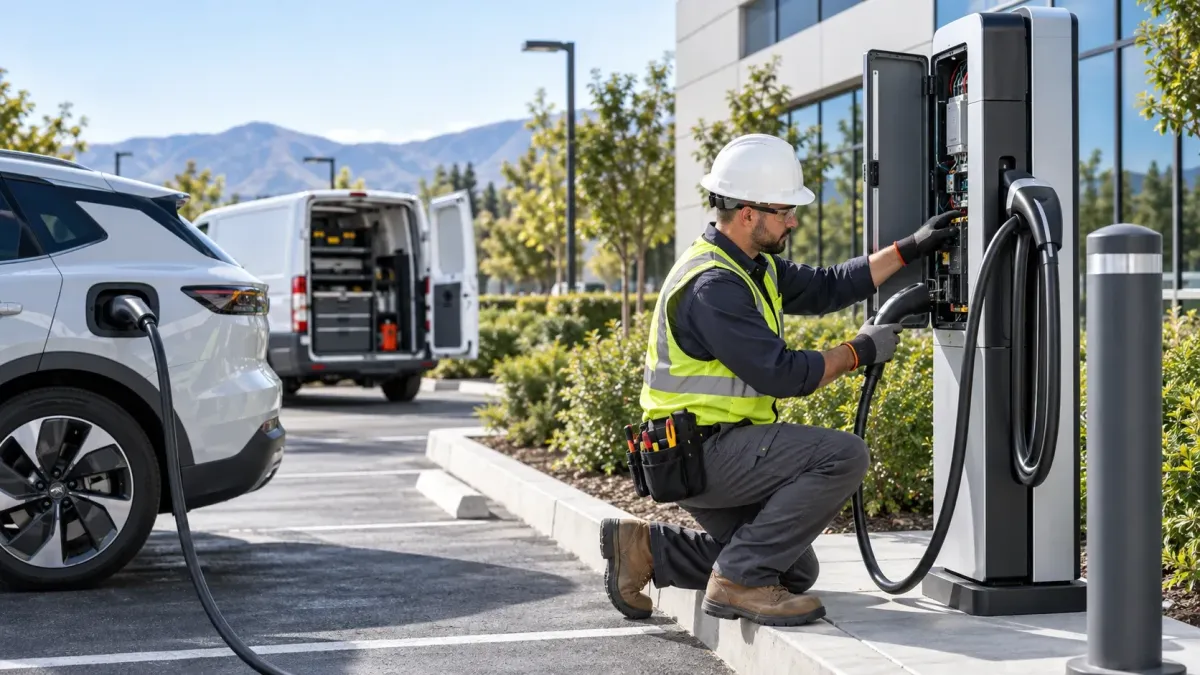
An annual check catches loose terminations and enclosure failures before they cook the connector.
Charger circuits are licensed electrical work, permitted and inspected like any new circuit.
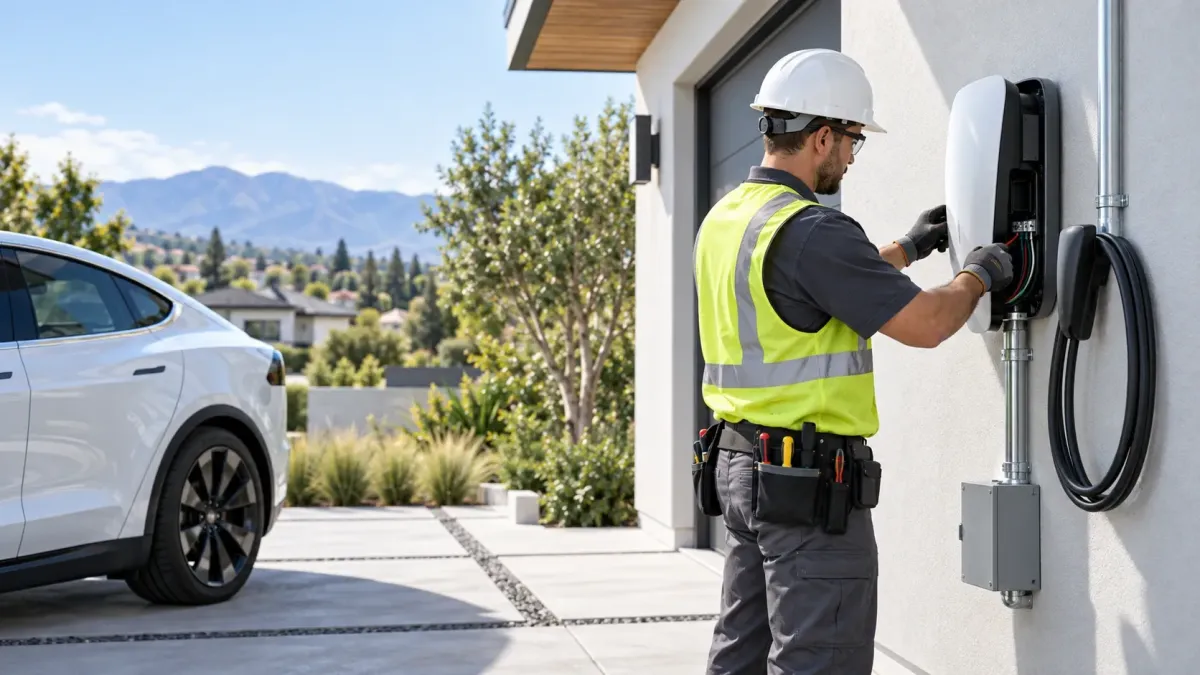
Circuit size and mounting position set how fast a Wall Connector actually charges.
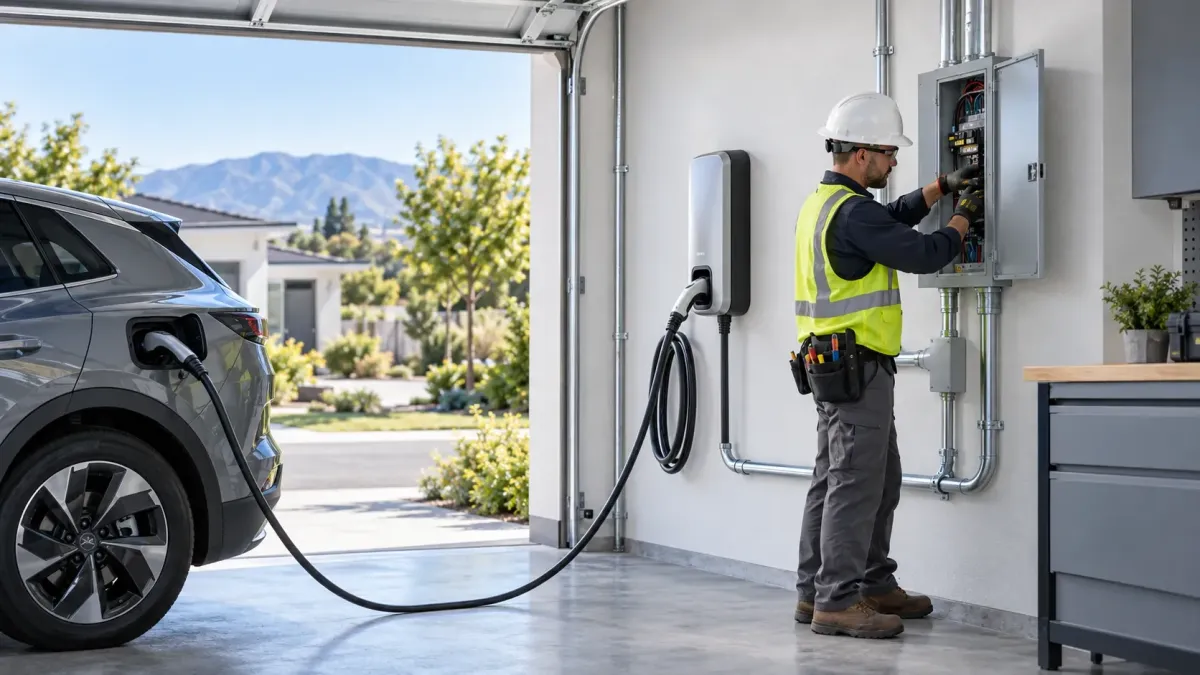
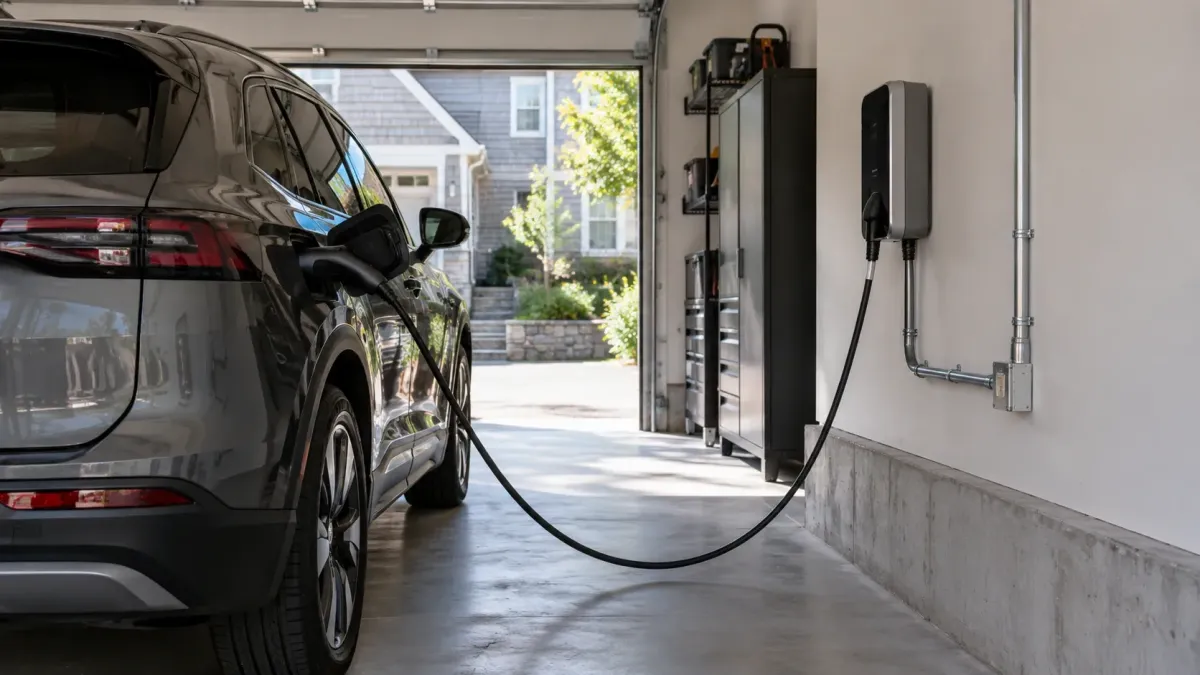
A Level 2 circuit turns overnight parking into a full battery every morning.
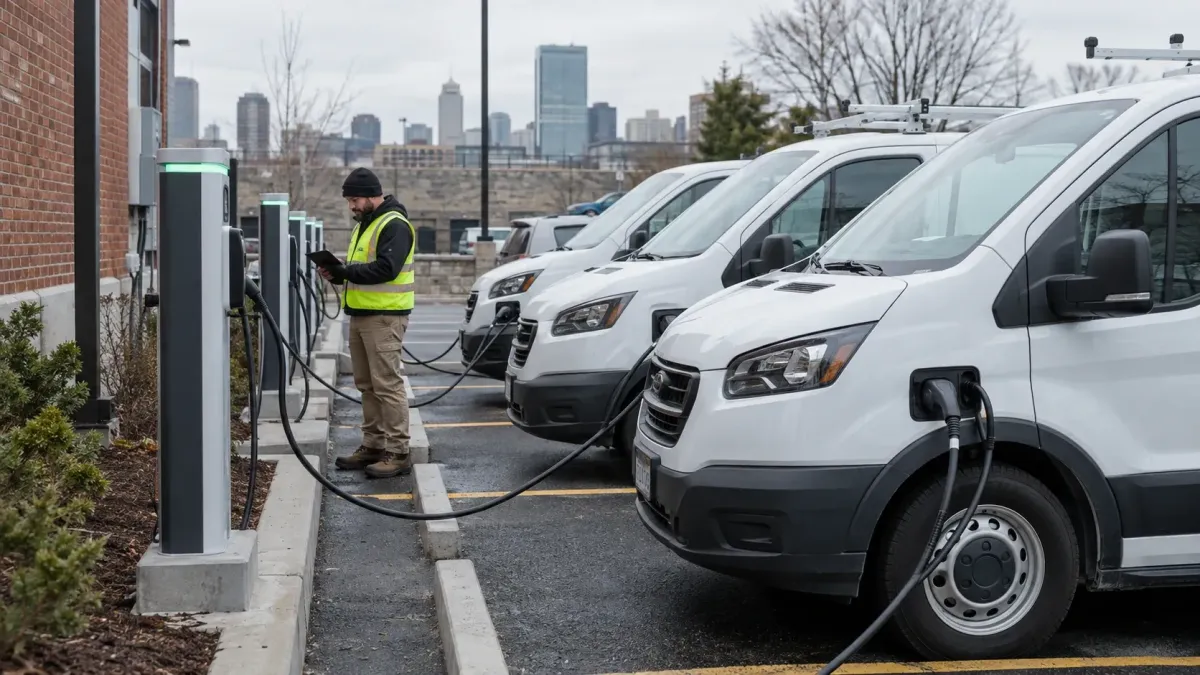
Fleet charging is designed from the duty cycle, not from the number of vehicles.
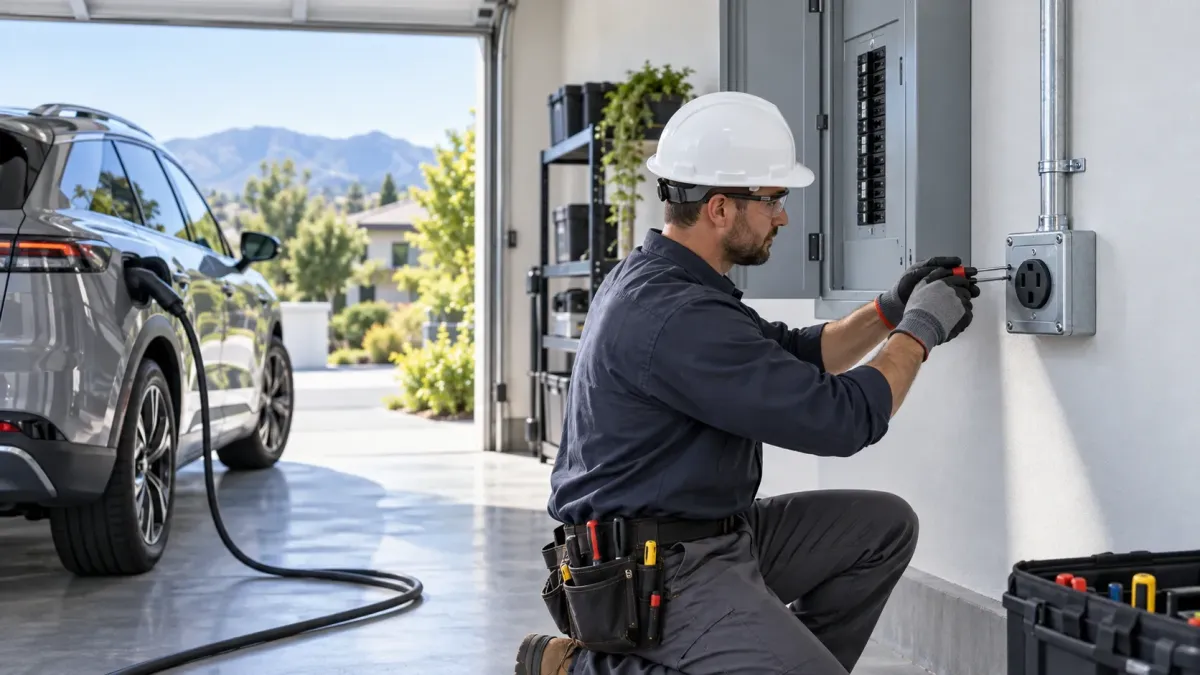
A 240-volt outlet lets a portable charger do most of what a wall unit does.
Frequently Asked Questions
EV Charging can be complex, and we’re here to provide answers to common questions. Here are some frequently asked questions from our clients.
Frequently Asked Questions about ev charger installation Boston MA
How much does EV charger installation cost in Boston?
Most Boston home installs land somewhere between roughly $1,700 and $4,000, and the spread is almost entirely about the panel and the distance. A charger mounted beside an existing panel with spare capacity sits at the bottom of that range; a run to a detached garage, or one that needs a panel upgrade first, sits at the top. We price after we have looked at the panel and the parking spot, because a number given before that is not a quote.
Do I need a permit to install an EV charger in Boston?
Yes. A new charger circuit is electrical work, and Massachusetts requires that it be filed with the municipal wiring inspector before it gets energized. We pull the permit under our license and meet the inspector for the rough and final. If an installer offers to skip that step, the circuit never gets inspected and the paperwork you need for a rebate does not exist.
Can my condo association block me from installing an EV charger in Massachusetts?
Not unreasonably. The Massachusetts Right-to-Charge law limits what a condo association can refuse when a unit owner wants a charger at their own parking space, though the association can still set reasonable conditions about routing, metering and insurance. What actually stalls these projects is incomplete paperwork rather than a flat refusal. We prepare the scope drawing, the equipment specification and the electrical detail the board needs to vote on.
Does installing an EV charger require a panel upgrade?
Sometimes, and it comes down to the load calculation rather than the age of the panel. A 100-amp service with electric heat or a large air conditioner often has no room for a 40-amp charger circuit, while another 100-amp house has plenty. We run the calculation during the site visit. Where the load is tight, a load-management device can occasionally solve it for less than a service upgrade would.
What rebates are available for EV charger installation in Massachusetts in 2026?
The state runs MOR-EV, the utilities run charger and make-ready rebates through Mass Save, and MassEVIP grants cover charging at multifamily buildings, workplaces, fleets and public sites. The federal residential charger credit ended on June 30, 2026, so a charger placed in service after that date does not qualify. Amounts and eligibility change, so we confirm what your address and utility actually qualify for before you commit to equipment.
How long does EV charger installation take in Boston?
The wiring on a straightforward residential install is usually a single day. What sets the overall timeline is the permit and inspection sequence, equipment lead time, and any utility work if the service itself has to change. A condo or commercial project adds the approval step ahead of all of that. We give you the sequence in writing, with the inspection date, so you know what is waiting on us and what is waiting on somebody else.
Still Have Questions About ev charger installation Boston MA?
Speak With a Trusted EV Charging Expert Today.
What Our Satisfied Clients Have to Say About Boston EV Charging Co.
We pride ourselves on delivering great results and experiences for each client. Hear directly from home and business owners who’ve trusted us with their EV Charging needs.
The Trusted EV Charging Expert Near You
Ready to hear more about expert services at Boston EV Charging Co.?
Contact us today to receive a detailed, no-obligation quote.
Serving Back Bay, Beacon Hill, South Boston, Dorchester, Jamaica Plain, Roslindale & Greater Boston
Mon–Fri 8AM–6PM | Sat 9AM–3PM | Sun Closed


