Panel Upgrades for EV Chargers in Boston
When 100-amp service will not carry the circuit
A large share of Boston-area housing still runs on 100-amp service, and a 40- or 50-amp charger circuit is a real addition to that. Whether it fits is a calculation, not a guess: existing heating, air conditioning, range, dryer and water heating all count against the service, and two houses with identical panels can land on opposite sides of the answer. We run the calculation during the site visit and show you the arithmetic. Where there is no room, there are two honest routes. A service upgrade replaces the panel and often the meter socket and service entrance, which means coordinating with the utility and with the local wiring inspector, and it leaves you with capacity for a heat pump or an induction range later. Load management is the other route: a device that monitors the service and throttles the charger when the rest of the house is drawing hard. It costs less, it installs faster, and it charges the car more slowly on the evenings when everything else is running. Which one is right depends on whether you plan to electrify anything else in the next few years. We will say which we would choose at your address and why, and we quote both so the comparison is yours to make.
A panel upgrade runs as one permitted job with the charger circuit rather than two separate visits. The sequence is calculation, permit, utility coordination for the service disconnect, panel and service entrance replacement, charger circuit, then rough and final inspection. Power is off for part of a day. You receive the load calculation, the permit number, the inspection sign-off and a labelled panel directory, which matters more than it sounds when the next electrician opens the door.
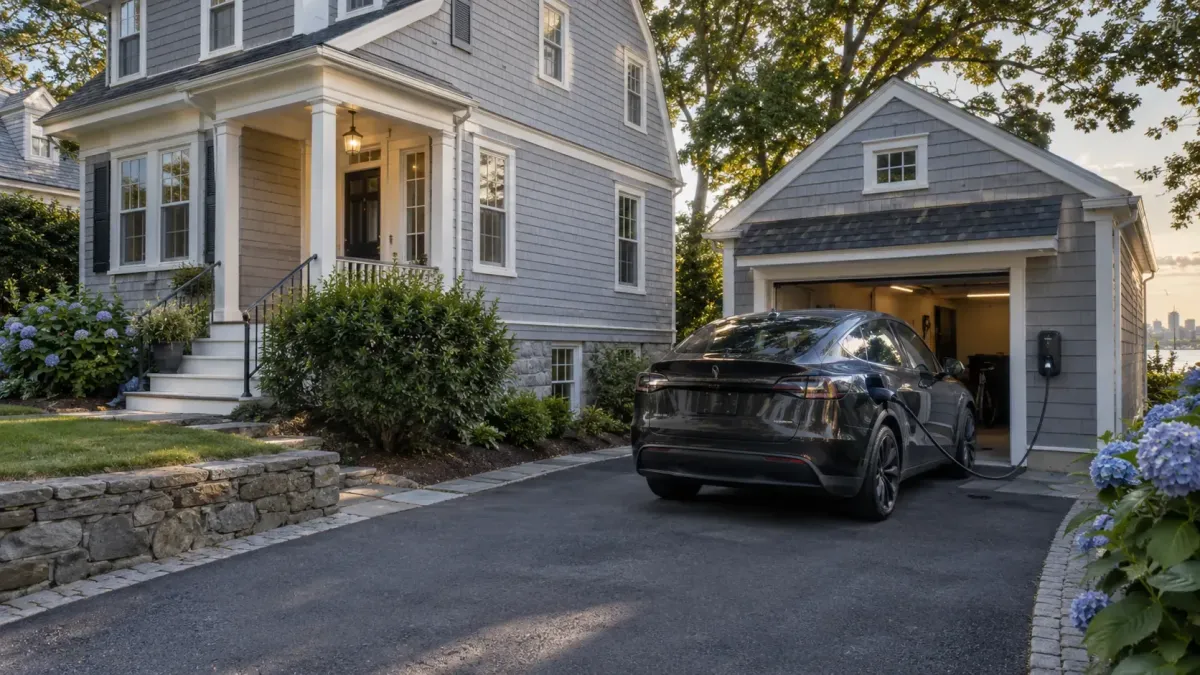
What's Included in our Panel Upgrade for EV Charger service?
Electrical panel upgrade for EV charger
A service upgrade sized for the charger plus whatever the house already runs.
Panel upgrade cost for EV charger
Priced from the calculation and the meter location, after we open the panel.
Load management as an alternative
A device that shares current can sometimes avoid a full service upgrade entirely.
Comprehensive EV Charging Services in Boston
Tailored to Your Needs
Ten services, from a single garage circuit to a commercial lot. The install work splits by what the panel can carry and by who owns the parking. Repair and maintenance keep an existing charger delivering full current instead of quietly derating.
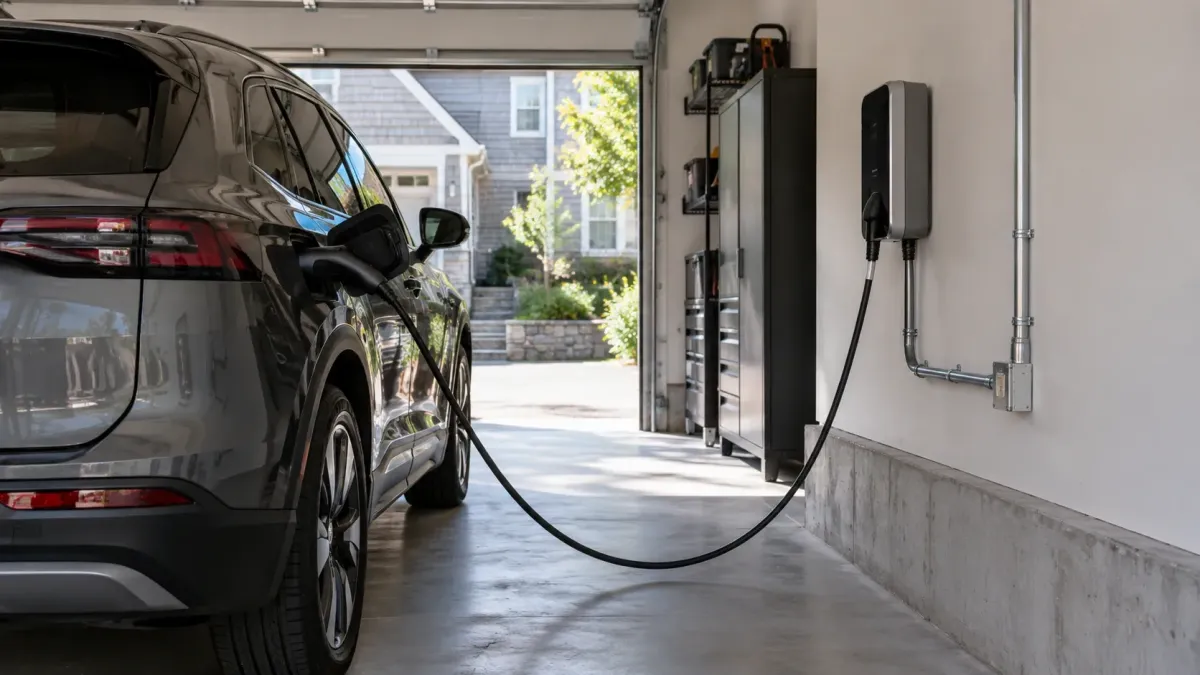
A load study decides how many commercial ports a building can actually carry.
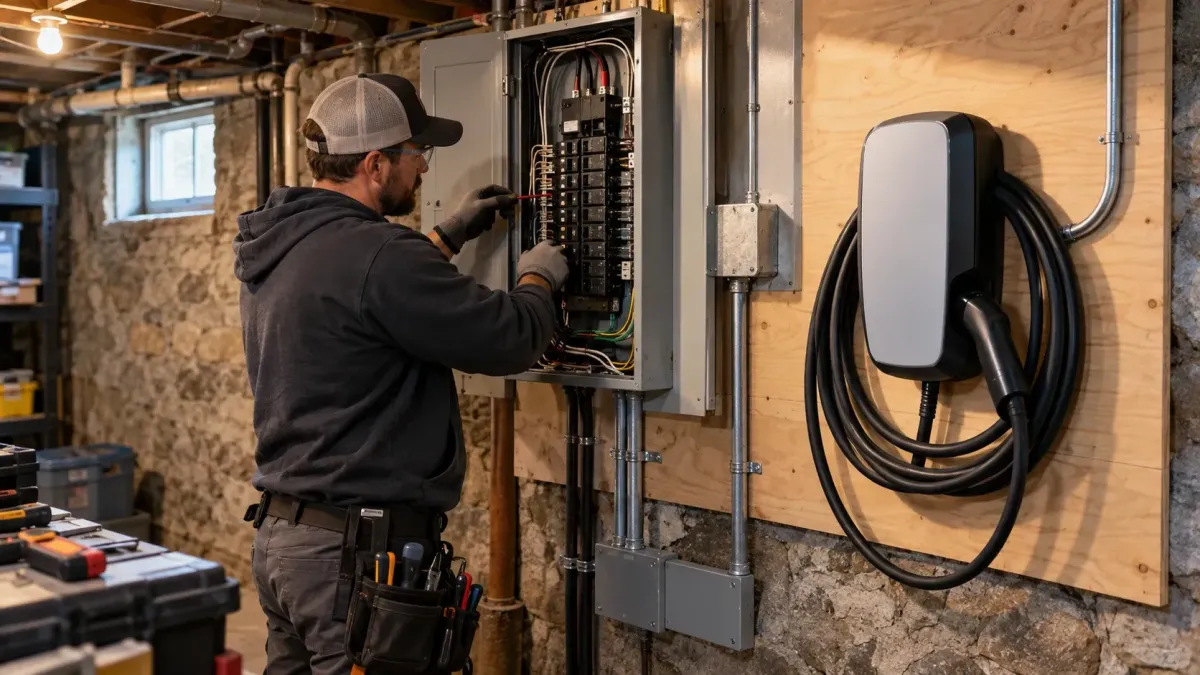
A load calculation decides whether the charger needs new service or a shared circuit.
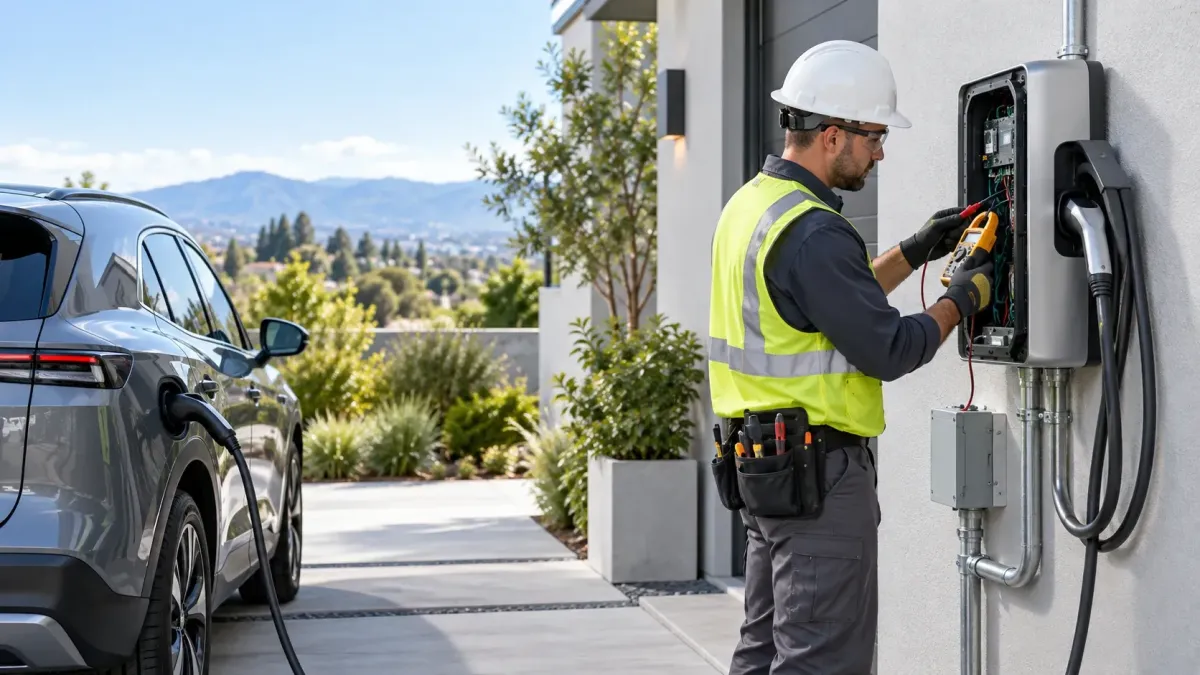
Diagnosis separates a charger fault from a circuit fault before anything gets replaced.
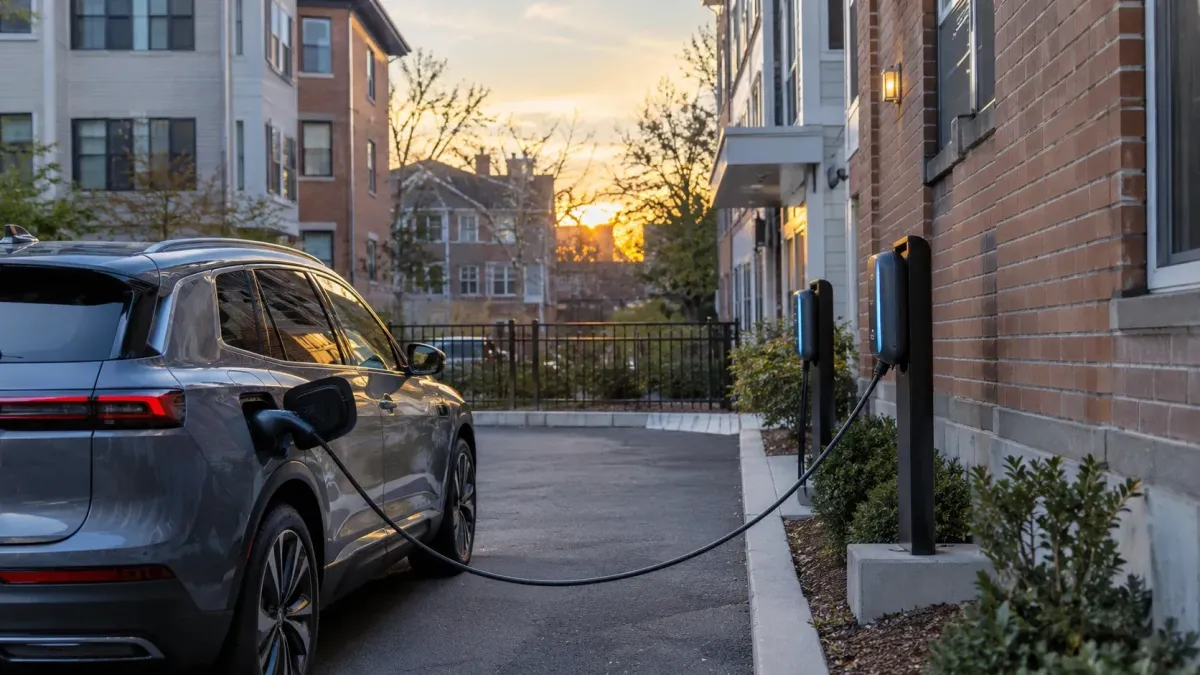
Board approval and metering decide a condo charger install more than the wiring does.
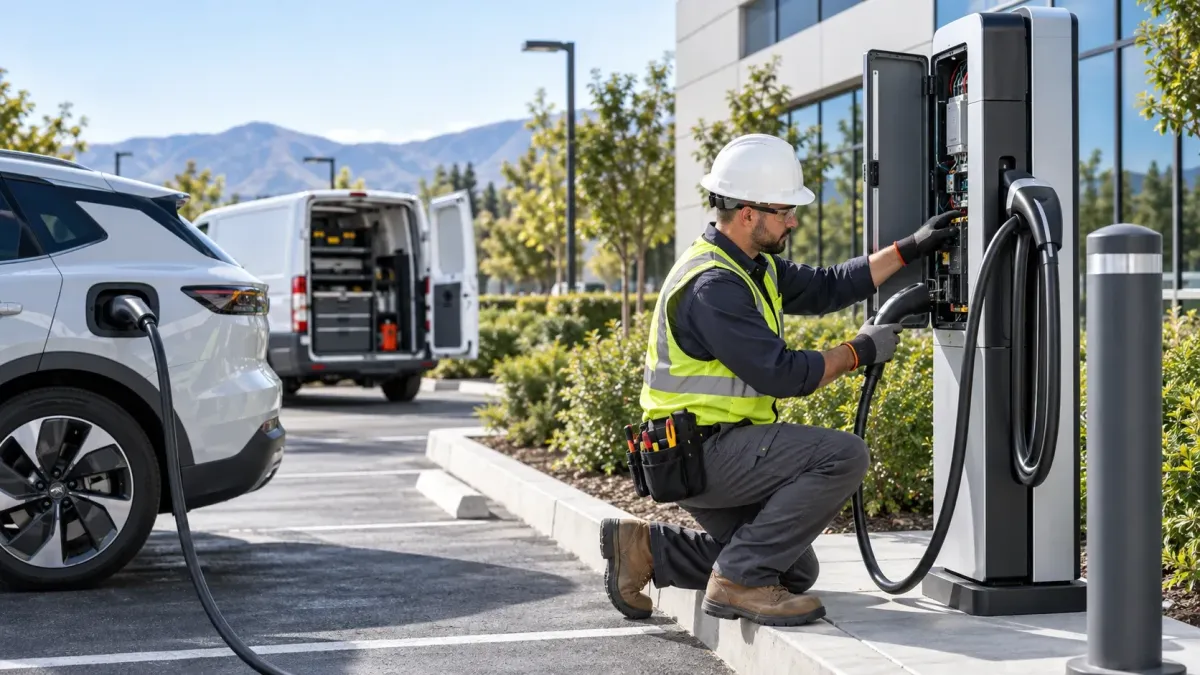
An annual check catches loose terminations and enclosure failures before they cook the connector.
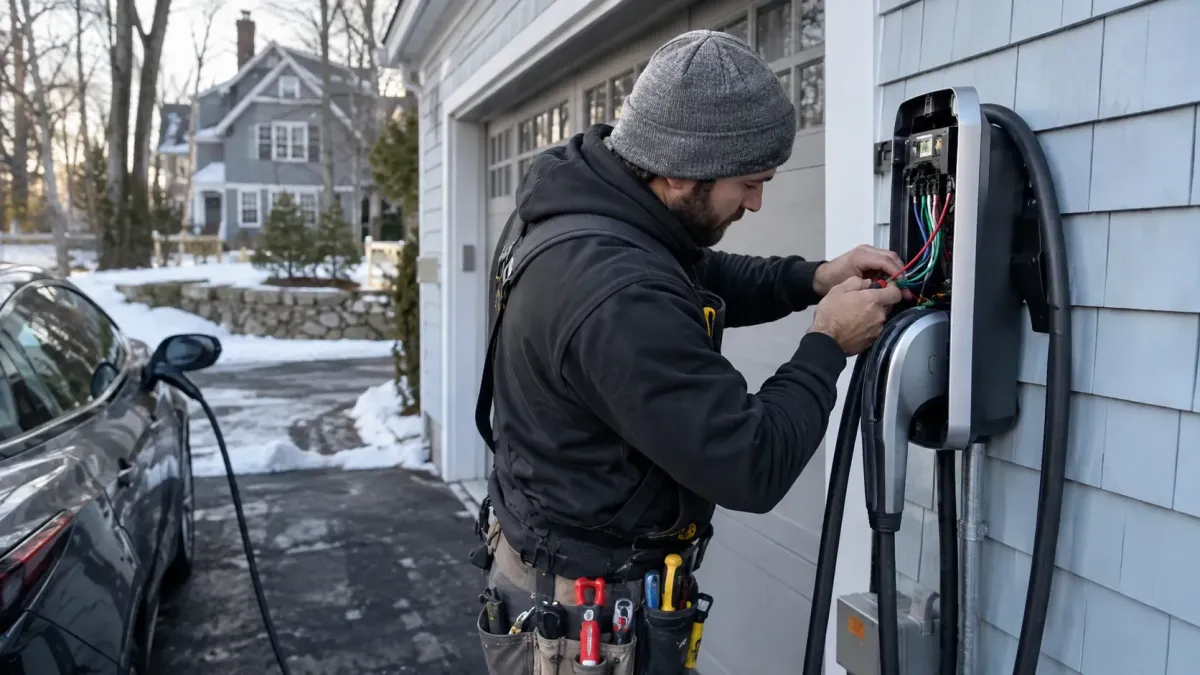
Charger circuits are licensed electrical work, permitted and inspected like any new circuit.
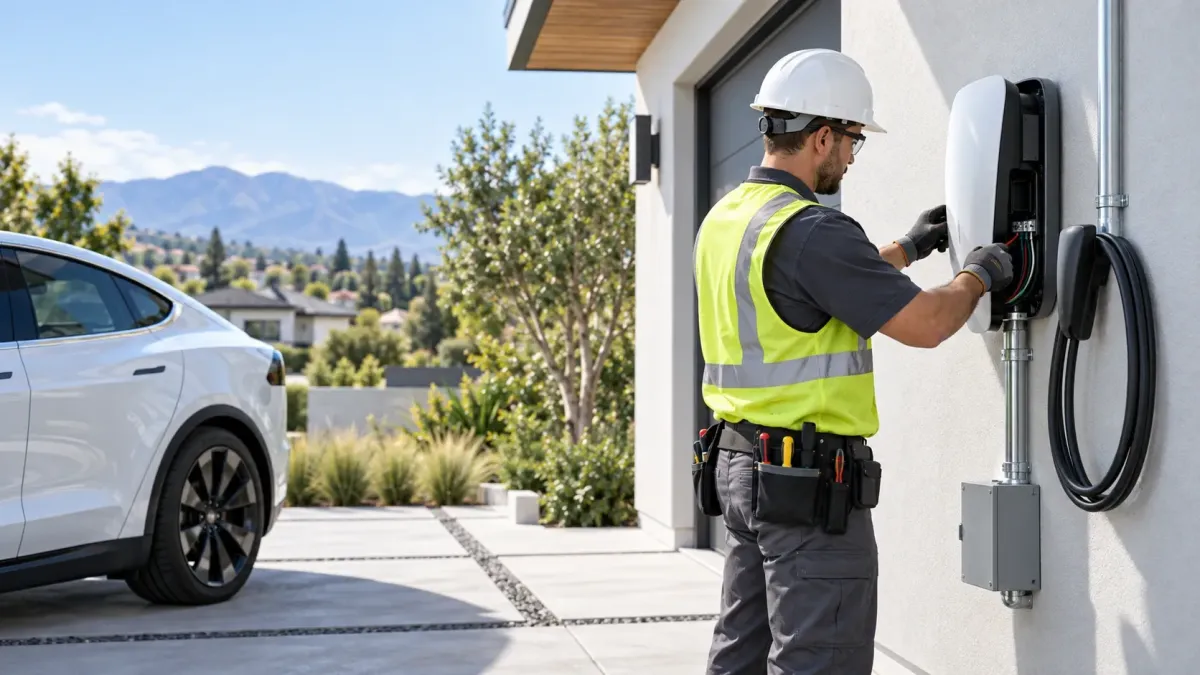
Circuit size and mounting position set how fast a Wall Connector actually charges.
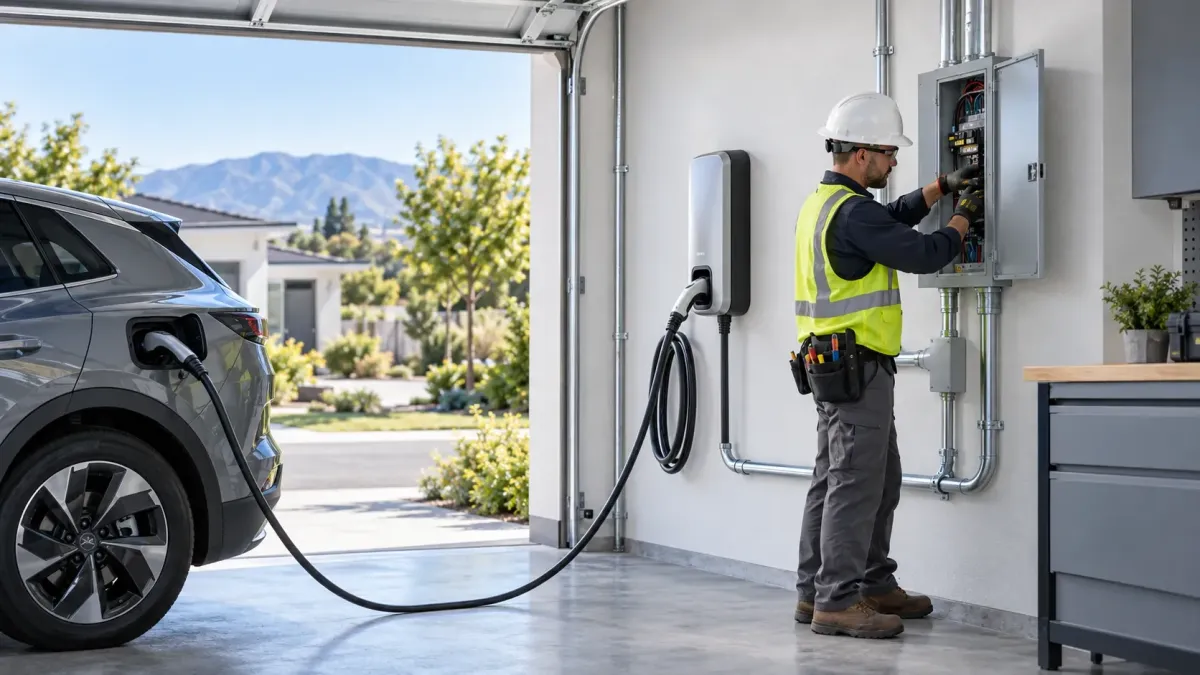
A Level 2 circuit turns overnight parking into a full battery every morning.
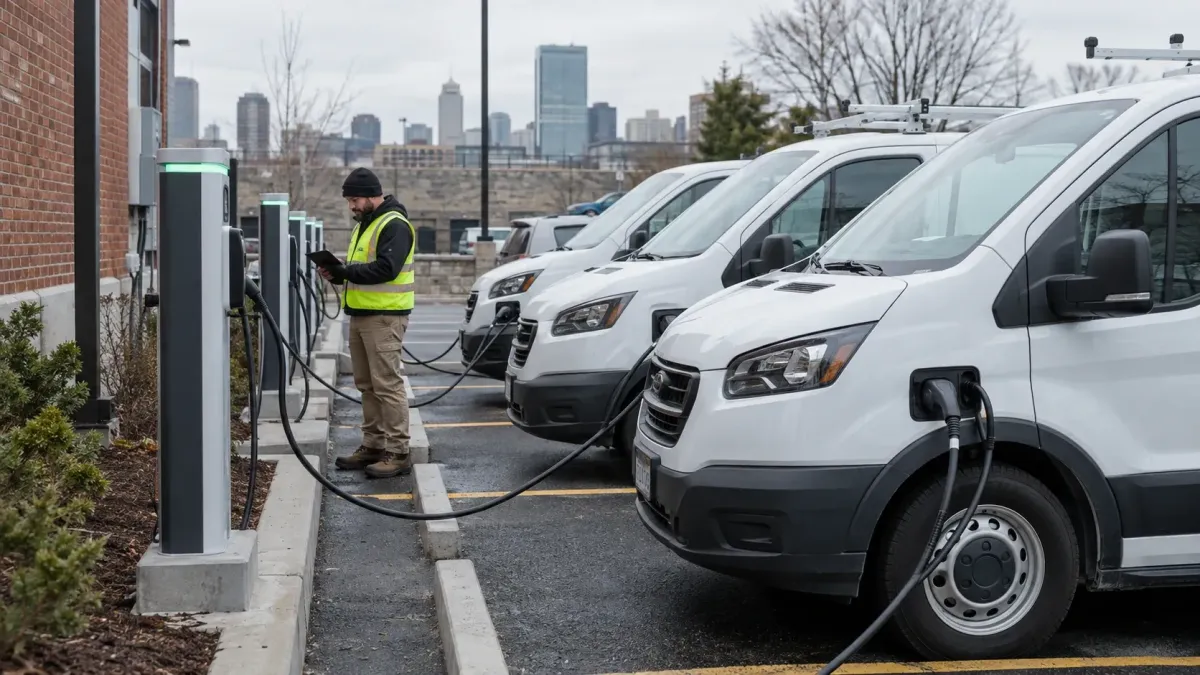
Fleet charging is designed from the duty cycle, not from the number of vehicles.
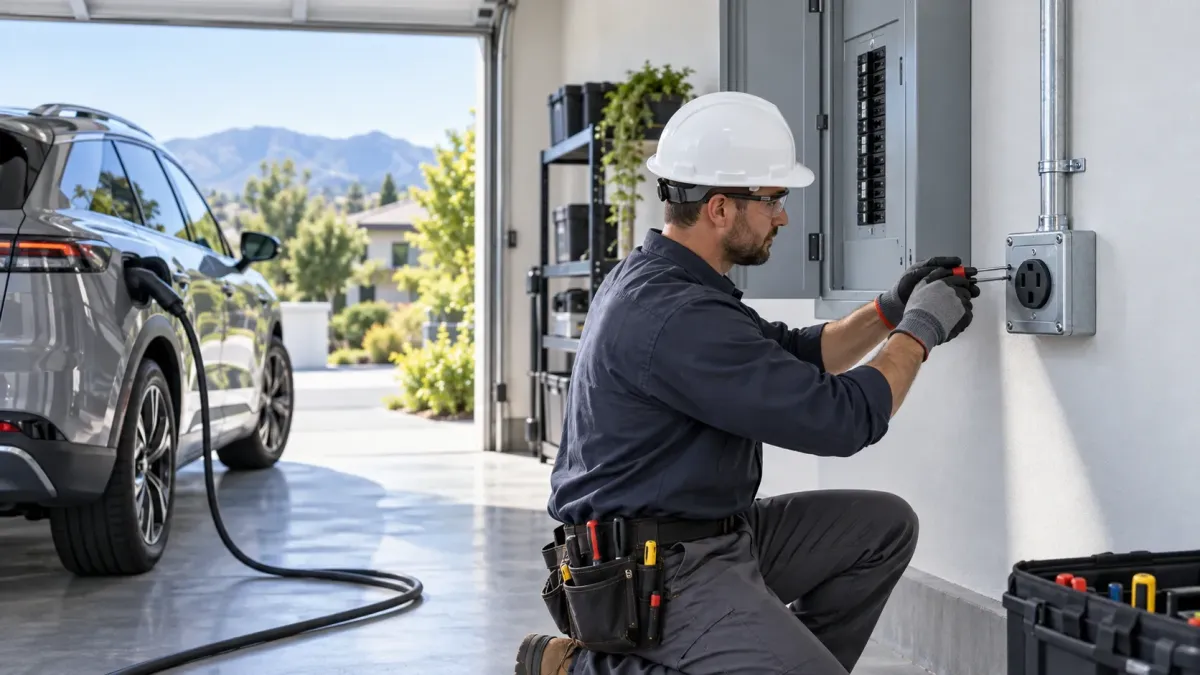
A 240-volt outlet lets a portable charger do most of what a wall unit does.
Where we install across Greater Boston
EV charging installed by licensed Boston electricians
Outside Boston we work in Cambridge, Somerville, Newton, Quincy and Medford. Each one files electrical permits through its own office and sits in its own utility territory, so the rebate route and the inspection timing shift from city to city. We confirm both before the first invoice.
Frequently Asked Questions
EV Charging can be complex, and we’re here to provide answers to common questions. Here are some frequently asked questions from our clients.
Frequently Asked Questions about ev charger installation Boston MA
How much does EV charger installation cost in Boston?
Most Boston home installs land somewhere between roughly $1,700 and $4,000, and the spread is almost entirely about the panel and the distance. A charger mounted beside an existing panel with spare capacity sits at the bottom of that range; a run to a detached garage, or one that needs a panel upgrade first, sits at the top. We price after we have looked at the panel and the parking spot, because a number given before that is not a quote.
Do I need a permit to install an EV charger in Boston?
Yes. A new charger circuit is electrical work, and Massachusetts requires that it be filed with the municipal wiring inspector before it gets energized. We pull the permit under our license and meet the inspector for the rough and final. If an installer offers to skip that step, the circuit never gets inspected and the paperwork you need for a rebate does not exist.
Can my condo association block me from installing an EV charger in Massachusetts?
Not unreasonably. The Massachusetts Right-to-Charge law limits what a condo association can refuse when a unit owner wants a charger at their own parking space, though the association can still set reasonable conditions about routing, metering and insurance. What actually stalls these projects is incomplete paperwork rather than a flat refusal. We prepare the scope drawing, the equipment specification and the electrical detail the board needs to vote on.
Does installing an EV charger require a panel upgrade?
Sometimes, and it comes down to the load calculation rather than the age of the panel. A 100-amp service with electric heat or a large air conditioner often has no room for a 40-amp charger circuit, while another 100-amp house has plenty. We run the calculation during the site visit. Where the load is tight, a load-management device can occasionally solve it for less than a service upgrade would.
What rebates are available for EV charger installation in Massachusetts in 2026?
The state runs MOR-EV, the utilities run charger and make-ready rebates through Mass Save, and MassEVIP grants cover charging at multifamily buildings, workplaces, fleets and public sites. The federal residential charger credit ended on June 30, 2026, so a charger placed in service after that date does not qualify. Amounts and eligibility change, so we confirm what your address and utility actually qualify for before you commit to equipment.
How long does EV charger installation take in Boston?
The wiring on a straightforward residential install is usually a single day. What sets the overall timeline is the permit and inspection sequence, equipment lead time, and any utility work if the service itself has to change. A condo or commercial project adds the approval step ahead of all of that. We give you the sequence in writing, with the inspection date, so you know what is waiting on us and what is waiting on somebody else.
Frequently Asked Questions about Panel Upgrade for EV Charger
How do I know if my panel can handle an EV charger?
The label on the main breaker tells you the service size, but not the answer. What matters is the calculated load: what the house already draws against what the service can carry. We open the panel, count the circuits, ask what appliances are electric, and run the calculation. Plenty of 100-amp Boston houses take a charger without any upgrade at all.
How much does a panel upgrade cost for an EV charger?
The main variables are the new service size, how far the meter is from the panel, and whether the service entrance and mast have to be replaced too. An upgrade in a basement directly behind the meter is a much smaller job than one that requires a new riser on an older building. We price it off the calculation and the meter location, and we quote the load-management alternative beside it.
Can I avoid a panel upgrade?
Sometimes, with load management or by setting the charger to a lower current. Both are legitimate engineering answers, not workarounds, and both get documented on the permit. The case for doing the upgrade anyway is future capacity: if a heat pump or an electric range is coming, doing the service once is cheaper than doing it twice.
How long is the power out during a panel upgrade?
Usually most of a working day, and it is scheduled with the utility rather than chosen by us. We tell you the date once the utility confirms it. Anything in the house that cannot lose power for that window, like a medical device or a chest freezer, needs planning ahead of the day rather than on the morning.
Check Whether Your Boston Panel Needs Upgrading
What Our Satisfied Clients Have to Say About Boston EV Charging Co.
We pride ourselves on delivering great results and experiences for each client. Hear directly from home and business owners who’ve trusted us with their EV Charging needs.
The Trusted EV Charging Expert Near You
Ready to hear more about expert services at Boston EV Charging Co.?
Contact us today to receive a detailed, no-obligation quote.
Serving Back Bay, Beacon Hill, South Boston, Dorchester, Jamaica Plain, Roslindale & Greater Boston
Mon–Fri 8AM–6PM | Sat 9AM–3PM | Sun Closed


