EV Charger Installation in Somerville, MA
Triple-decker and condo-conversion installs
Somerville is one of the most densely built cities in the country, and that single fact shapes every charger install in it. Most housing is triple-decker or rowhouse, much of it converted to condominiums, and the parking is a shared driveway with two or three cars in tandem. So the first question is not which charger but which unit's panel can legally and physically reach the space the car occupies. In a converted three-family near Union Square or Ball Square, the panels sit in a common basement and the deeded space is at the back of the drive, which means the conduit route crosses common area and the association has to agree to it. Electrical work is filed with the Inspectional Services Division, and the wire inspector there both issues the permit and notifies the utility when a new meter is needed, so those two steps are less separable here than owners expect. Tandem parking also changes the hardware: a cable that reaches the front car will not reach the back one.
Permits through the Inspectional Services Division
Condo conversion is the reason Right-to-Charge comes up more in Somerville than almost anywhere. A great many owners here hold one unit and one space in a building that was a single family a generation ago, and the Massachusetts law means the association cannot unreasonably refuse a charger at that space, though it can set conditions on routing, metering and insurance. Those conditions are where projects stall, so we build the submission around them. Green Line Extension stations at Union Square, East Somerville, Magoun Square and Ball Square have brought more residents who commute without a car every day and charge overnight instead, which is exactly the pattern shared-capacity charging suits. Somerville sits in Eversource territory, so the rebate path and the make-ready route match the rest of the inner suburbs.
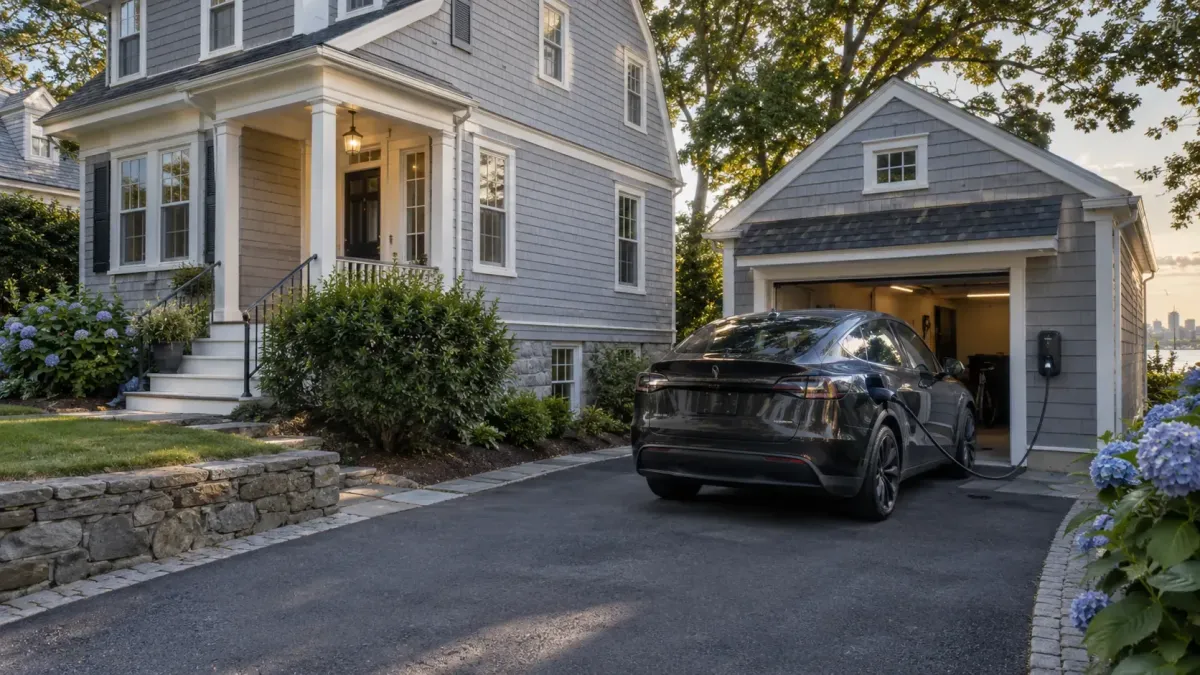
Which unit panel can reach the space
Commercial and shared charging in Somerville usually means a converted building with several owners rather than a company with a parking lot. The economics are different: nobody wants to fund four separate service upgrades, so the sensible design is one shared installation with metering that keeps each owner paying for their own consumption. That takes a load study on the house service, a decision about submetering or networked units, and an association vote. We handle all three as one package. Buildings near Union Square with ground-floor commercial space have the additional option of MassEVIP funding, which covers multifamily and workplace charging and has to be filed before construction. Where the house service cannot carry the eventual port count, load management is usually the answer rather than new service, because residents park overnight and have hours to share. We size the conduit and the panel space for more ports than phase one needs.
Right-to-Charge submissions for converted buildings
Panel work in Somerville is complicated by where the panels are. In a converted triple-decker the unit panels and the house panel share a basement, the service entrance is often original, and the total connected load was never calculated with three modern kitchens and a charger in mind. So the calculation has to cover the building, not just your unit. Where a service upgrade is the answer, the wire inspector at the Inspectional Services Division notifies the utility for the new meter, which keeps that coordination in one place but does put your schedule behind the utility's. Where load management works instead, it avoids the meter change entirely and is frequently the faster route in a building with multiple owners to persuade. Either way the exterior service entrance on a closely-spaced rowhouse is a tight working space, and that shows up in the labour rather than the materials.
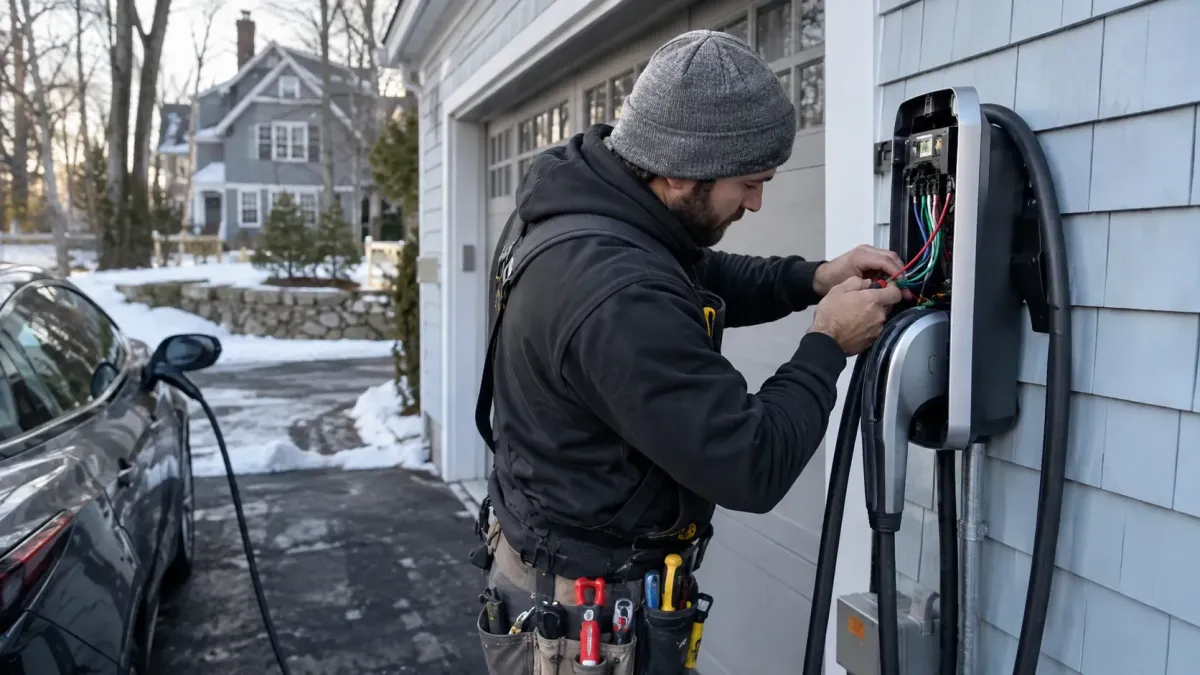
New meters and the wire inspector
The repair pattern in Somerville follows the parking, and the tandem drives around Union Square and Ball Square produce most of it. Chargers mounted at the back of a shared driveway live outdoors permanently, take snow piled against them all winter, and get their cables dragged across a concrete lip every night. Cable jackets and connector faces wear out here faster than in a garage, and those are repairable parts rather than reasons to replace a unit. The second common finding is a long run from a basement panel to the rear of the property where a termination has loosened under thermal cycling. We test the supply under load before assessing the unit itself. On tandem-parked drives we also see chargers reported as faulty when the real issue is a cable being stretched to reach the far car, which stresses the connector and eventually the strain relief. That is a mounting problem, and moving the unit fixes it permanently.
EV charging installed by licensed Boston electricians
Comprehensive EV Charging Services in Boston
Tailored to Your Needs
Ten services, from a single garage circuit to a commercial lot. The install work splits by what the panel can carry and by who owns the parking. Repair and maintenance keep an existing charger delivering full current instead of quietly derating.
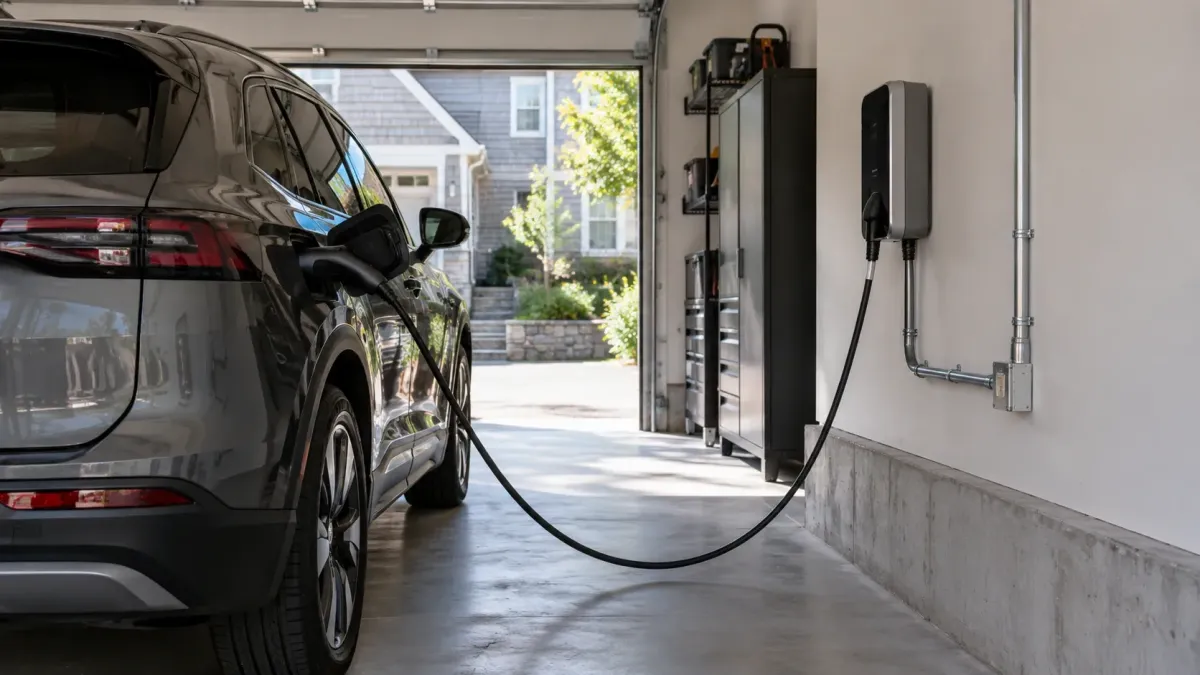
A load study decides how many commercial ports a building can actually carry.
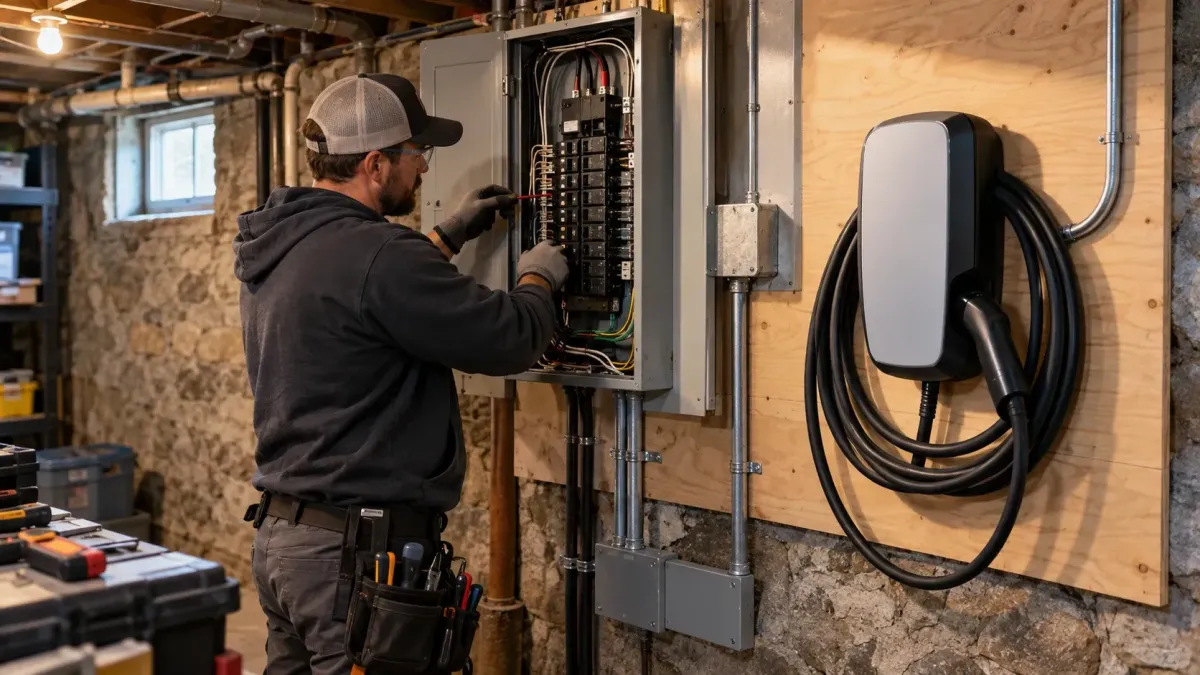
A load calculation decides whether the charger needs new service or a shared circuit.
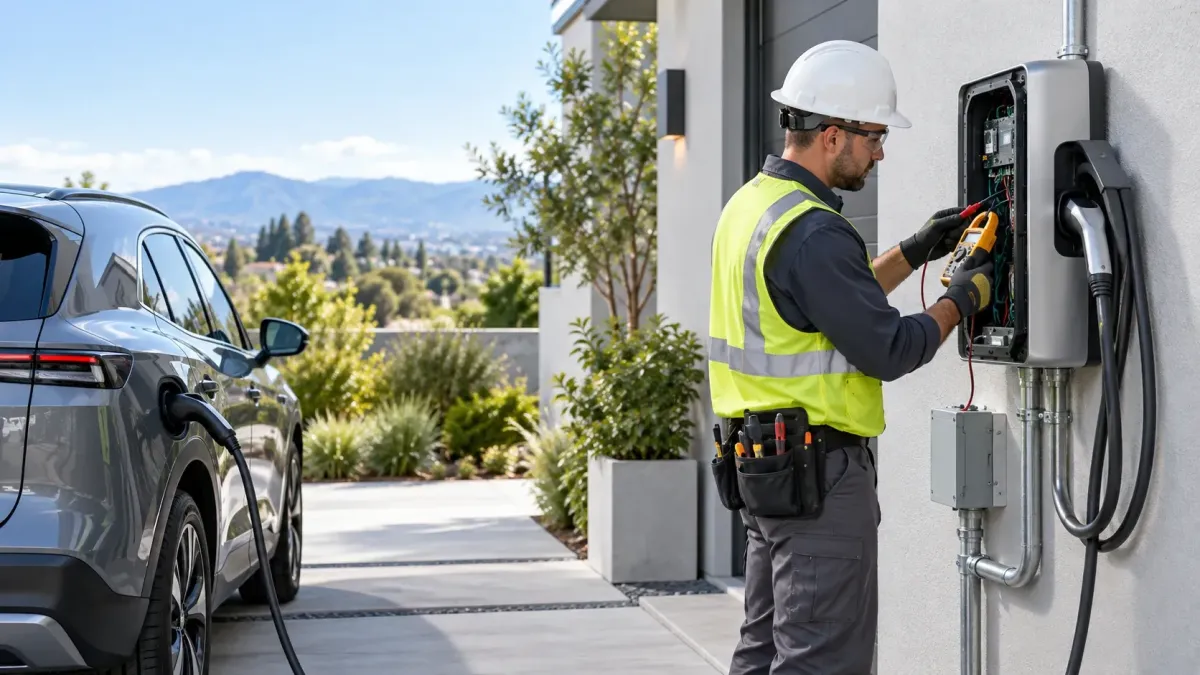
Diagnosis separates a charger fault from a circuit fault before anything gets replaced.
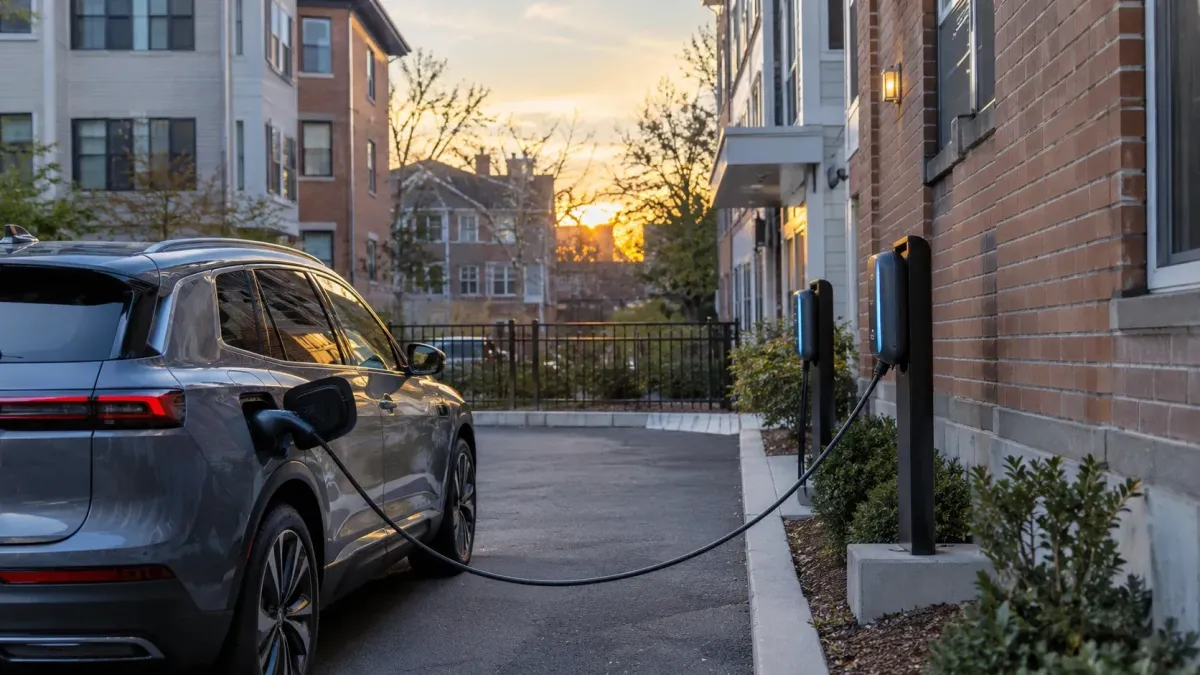
Board approval and metering decide a condo charger install more than the wiring does.
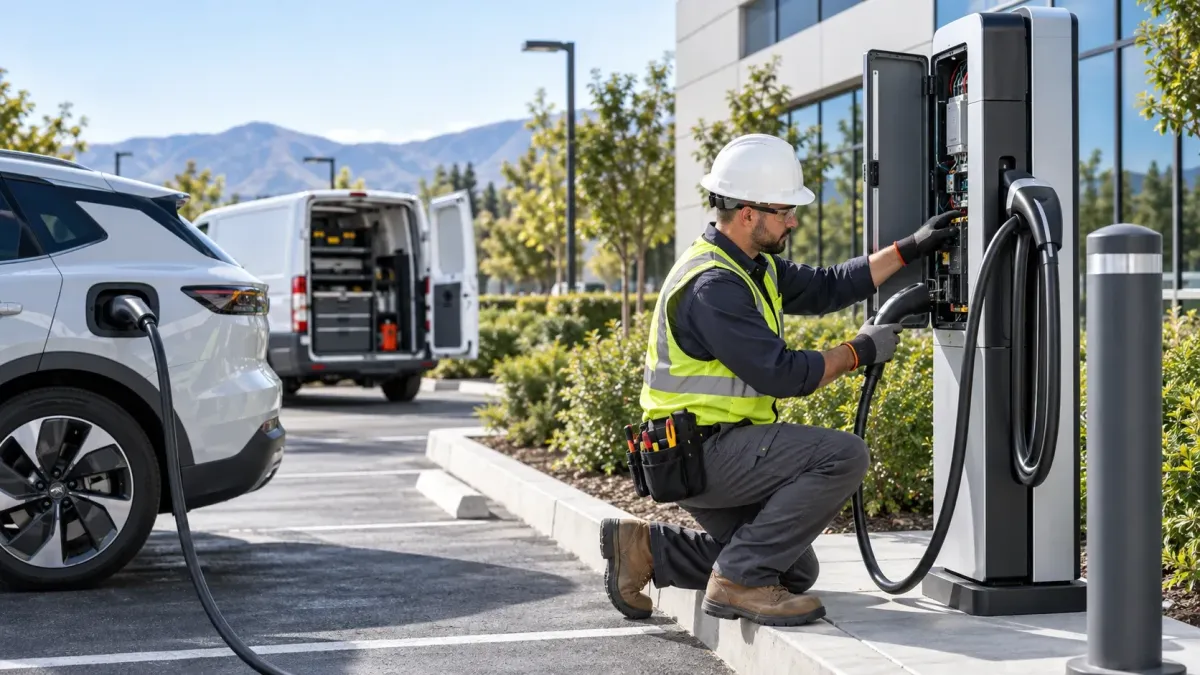
An annual check catches loose terminations and enclosure failures before they cook the connector.
Charger circuits are licensed electrical work, permitted and inspected like any new circuit.
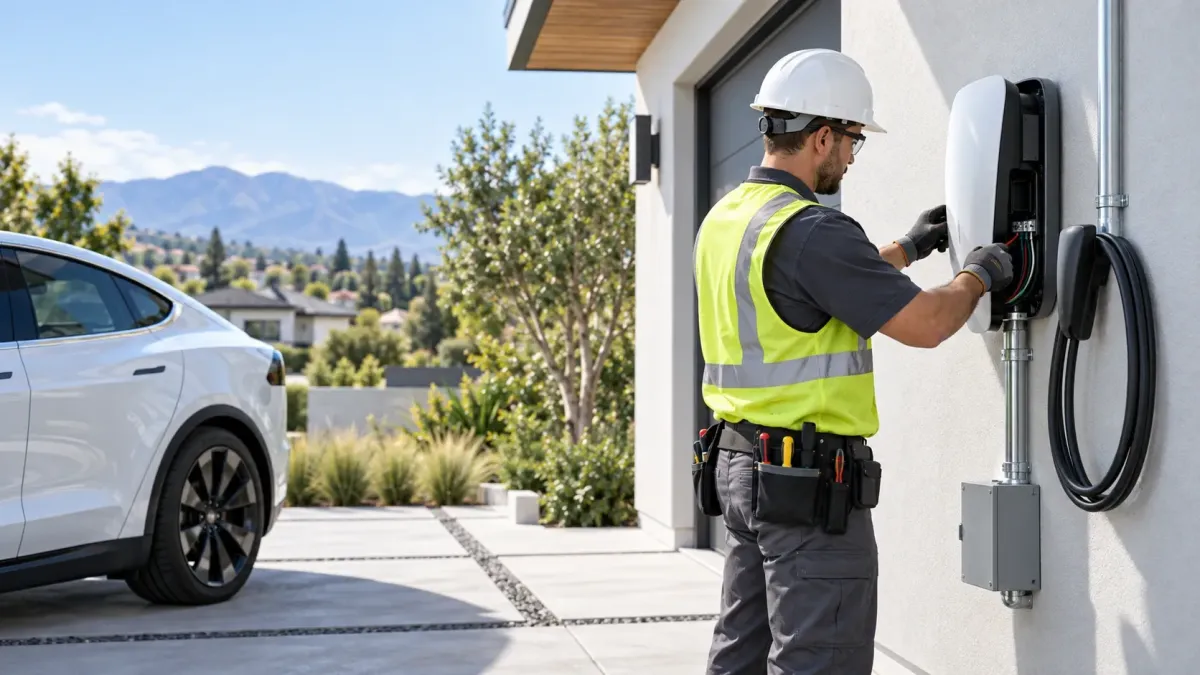
Circuit size and mounting position set how fast a Wall Connector actually charges.
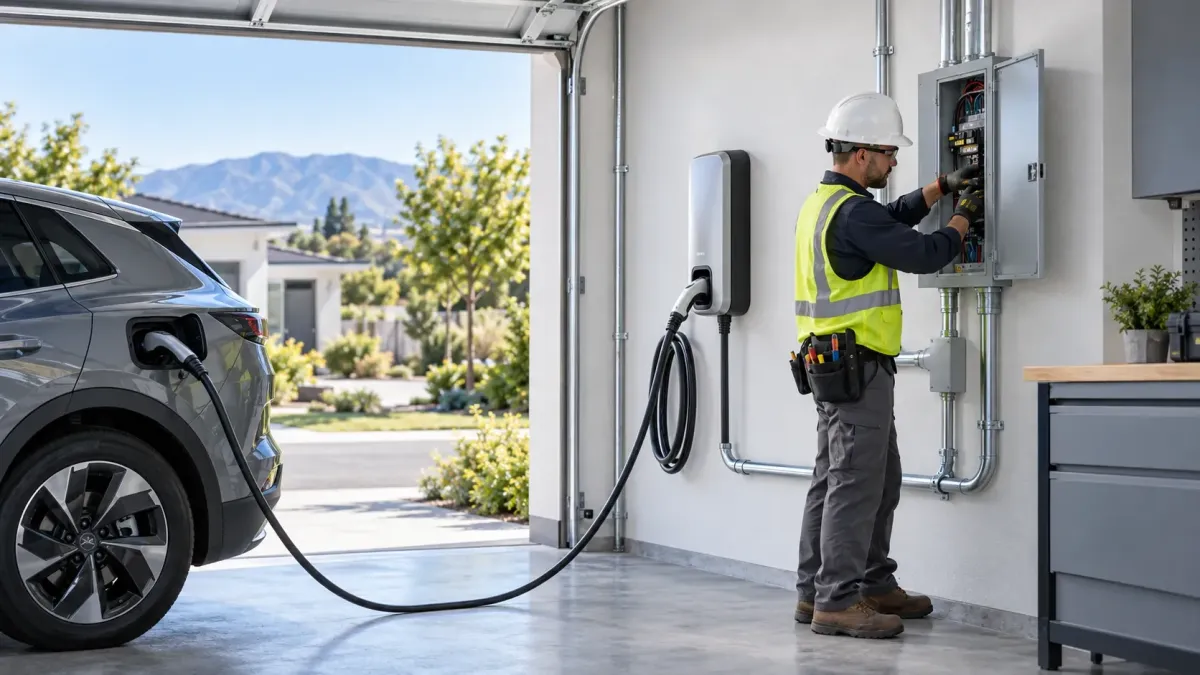
A Level 2 circuit turns overnight parking into a full battery every morning.
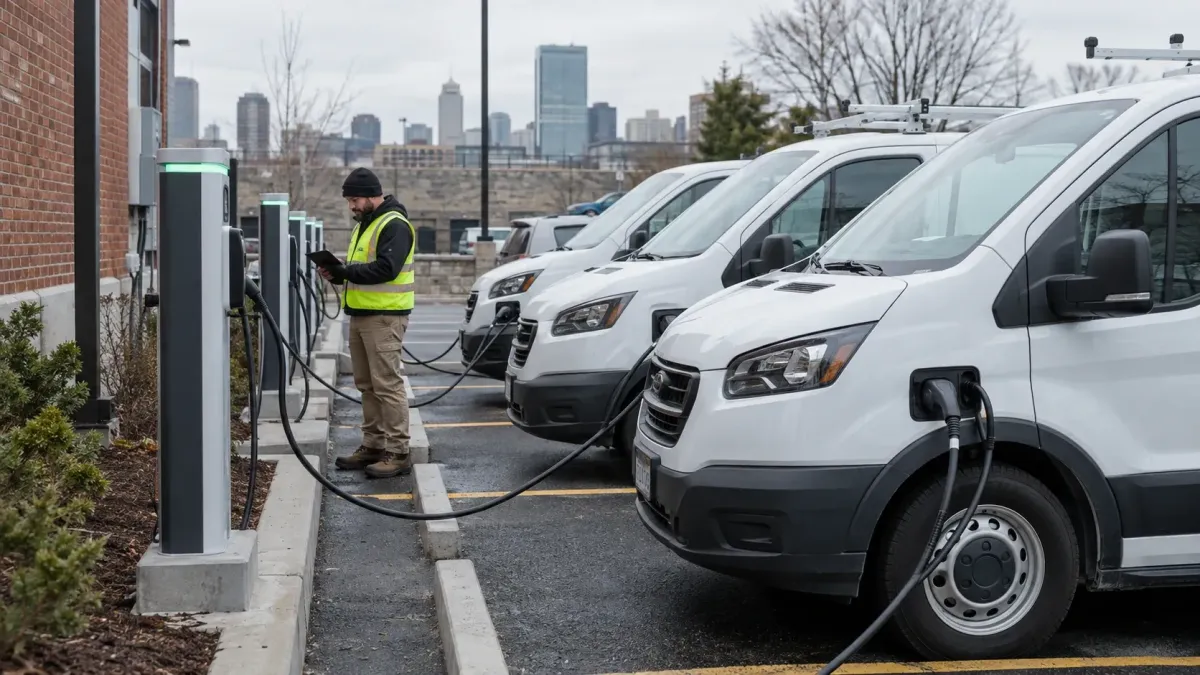
Fleet charging is designed from the duty cycle, not from the number of vehicles.
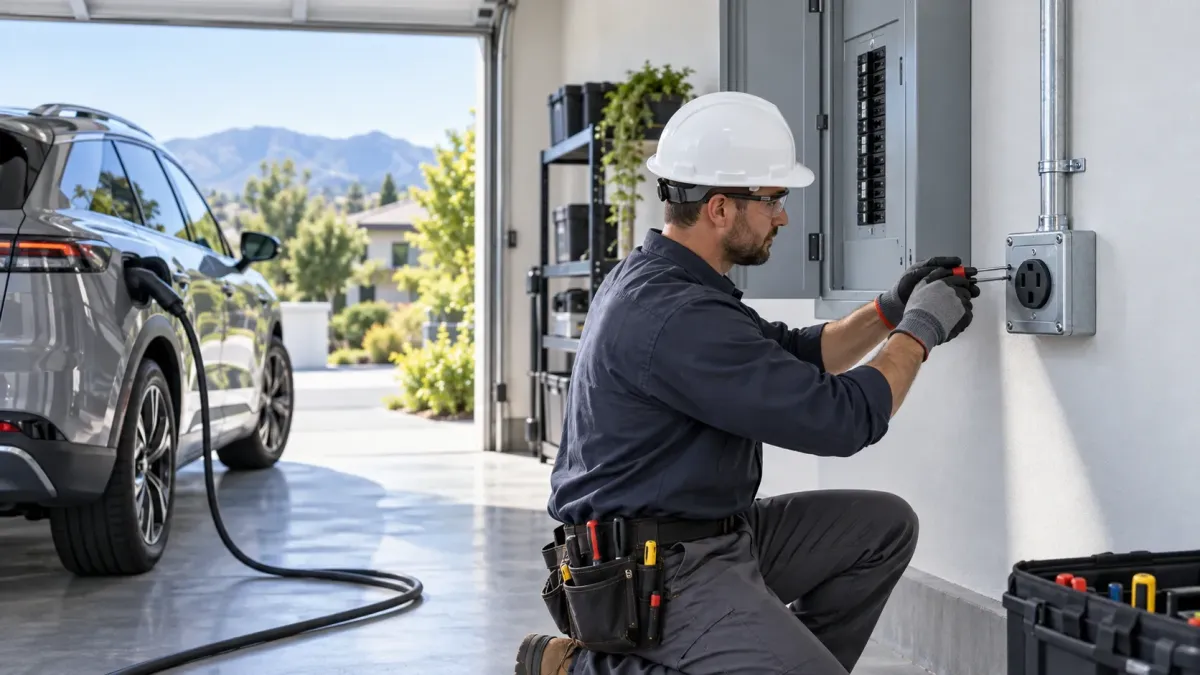
A 240-volt outlet lets a portable charger do most of what a wall unit does.
Frequently Asked Questions
EV Charging can be complex, and we’re here to provide answers to common questions. Here are some frequently asked questions from our clients.
Frequently Asked Questions about ev charger installation Boston MA
How much does EV charger installation cost in Boston?
Most Boston home installs land somewhere between roughly $1,700 and $4,000, and the spread is almost entirely about the panel and the distance. A charger mounted beside an existing panel with spare capacity sits at the bottom of that range; a run to a detached garage, or one that needs a panel upgrade first, sits at the top. We price after we have looked at the panel and the parking spot, because a number given before that is not a quote.
Do I need a permit to install an EV charger in Boston?
Yes. A new charger circuit is electrical work, and Massachusetts requires that it be filed with the municipal wiring inspector before it gets energized. We pull the permit under our license and meet the inspector for the rough and final. If an installer offers to skip that step, the circuit never gets inspected and the paperwork you need for a rebate does not exist.
Can my condo association block me from installing an EV charger in Massachusetts?
Not unreasonably. The Massachusetts Right-to-Charge law limits what a condo association can refuse when a unit owner wants a charger at their own parking space, though the association can still set reasonable conditions about routing, metering and insurance. What actually stalls these projects is incomplete paperwork rather than a flat refusal. We prepare the scope drawing, the equipment specification and the electrical detail the board needs to vote on.
Does installing an EV charger require a panel upgrade?
Sometimes, and it comes down to the load calculation rather than the age of the panel. A 100-amp service with electric heat or a large air conditioner often has no room for a 40-amp charger circuit, while another 100-amp house has plenty. We run the calculation during the site visit. Where the load is tight, a load-management device can occasionally solve it for less than a service upgrade would.
What rebates are available for EV charger installation in Massachusetts in 2026?
The state runs MOR-EV, the utilities run charger and make-ready rebates through Mass Save, and MassEVIP grants cover charging at multifamily buildings, workplaces, fleets and public sites. The federal residential charger credit ended on June 30, 2026, so a charger placed in service after that date does not qualify. Amounts and eligibility change, so we confirm what your address and utility actually qualify for before you commit to equipment.
How long does EV charger installation take in Boston?
The wiring on a straightforward residential install is usually a single day. What sets the overall timeline is the permit and inspection sequence, equipment lead time, and any utility work if the service itself has to change. A condo or commercial project adds the approval step ahead of all of that. We give you the sequence in writing, with the inspection date, so you know what is waiting on us and what is waiting on somebody else.
Still Have Questions About ev charger installation Boston MA?
Speak With a Trusted EV Charging Expert Today.
The Trusted EV Charging Expert Near You
Ready to hear more about expert services at Boston EV Charging Co.?
Contact us today to receive a detailed, no-obligation quote.
Serving Back Bay, Beacon Hill, South Boston, Dorchester, Jamaica Plain, Roslindale & Greater Boston
Mon–Fri 8AM–6PM | Sat 9AM–3PM | Sun Closed


