EV Charger Maintenance in Boston, MA
An annual check on the parts that fail quietly
Charging hardware fails in a specific and boring order. Terminations loosen under thermal cycling and start heating, connector faces wear and pit after a few thousand plug-ins, cable jackets crack where they get dragged over a concrete lip, and outdoor enclosures let in water at the gasket or the conduit entry long before the electronics give up. None of that announces itself. The unit keeps charging, a little slower, until a breaker trips or a connector discolours. An annual visit checks the things that actually go: torque on the terminations, thermal condition under load, the integrity of the enclosure and its seals, the connector and cable, and the fault log if the unit keeps one. Boston adds winter to the list. Salt spray, freeze-thaw movement and snow piled against a pedestal or a wall-mounted unit all work on the enclosure, and units installed without the right NEMA rating for their exposure show it first at the terminations. We check what we find and tell you when nothing needs doing, which is the usual outcome on a well-installed unit. Commercial sites get the same inspection per port, plus uptime reporting, because a dead port nobody reported is a tenant complaint waiting to happen.
A residential visit takes under an hour: de-energize, inspect and re-torque terminations, check the enclosure and gasket, inspect connector and cable, test delivery under load, review the fault log, re-energize and verify a full session. You get a short written report listing what was checked, what was corrected, and anything to watch next year. On commercial sites the same check runs per port on a schedule, with the report covering uptime and any port taken out of service.
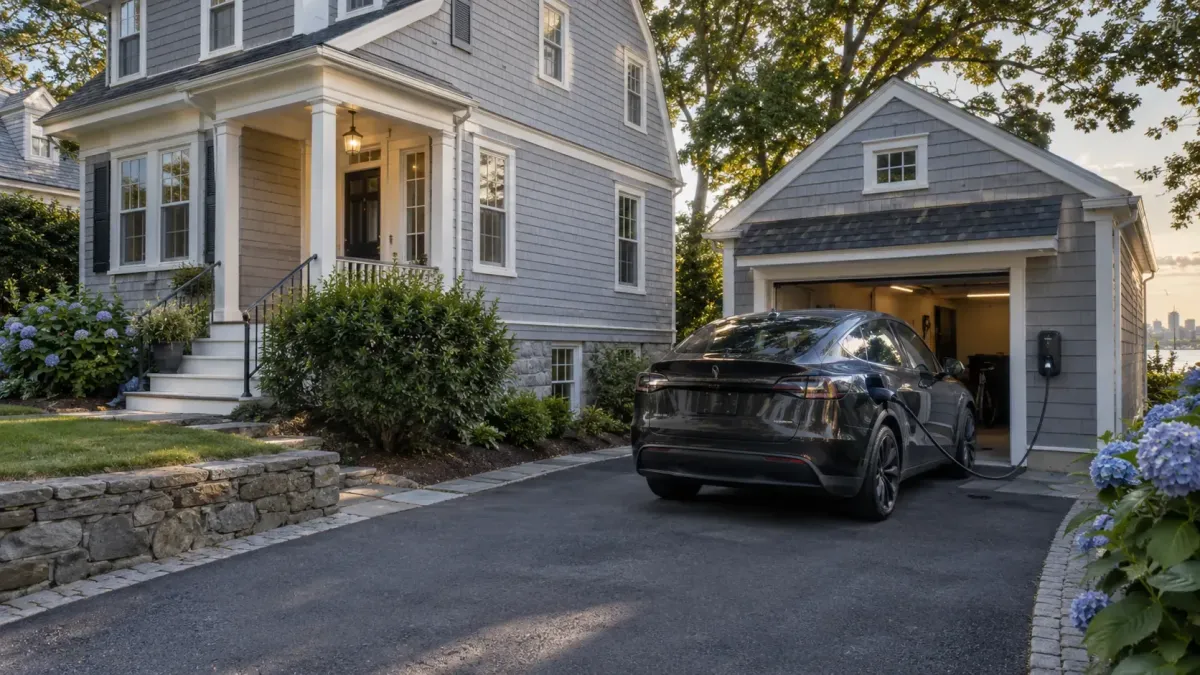
What's Included in our EV Charger Maintenance service?
EV charger maintenance near me
Annual visits for residential units, scheduled at the same time each year.
EV charger maintenance cost
A flat visit price for a single residential unit, per port on commercial sites.
Commercial charger service contracts
Scheduled checks and uptime reporting for buildings with paying or shared users.
Comprehensive EV Charging Services in Boston
Tailored to Your Needs
Ten services, from a single garage circuit to a commercial lot. The install work splits by what the panel can carry and by who owns the parking. Repair and maintenance keep an existing charger delivering full current instead of quietly derating.
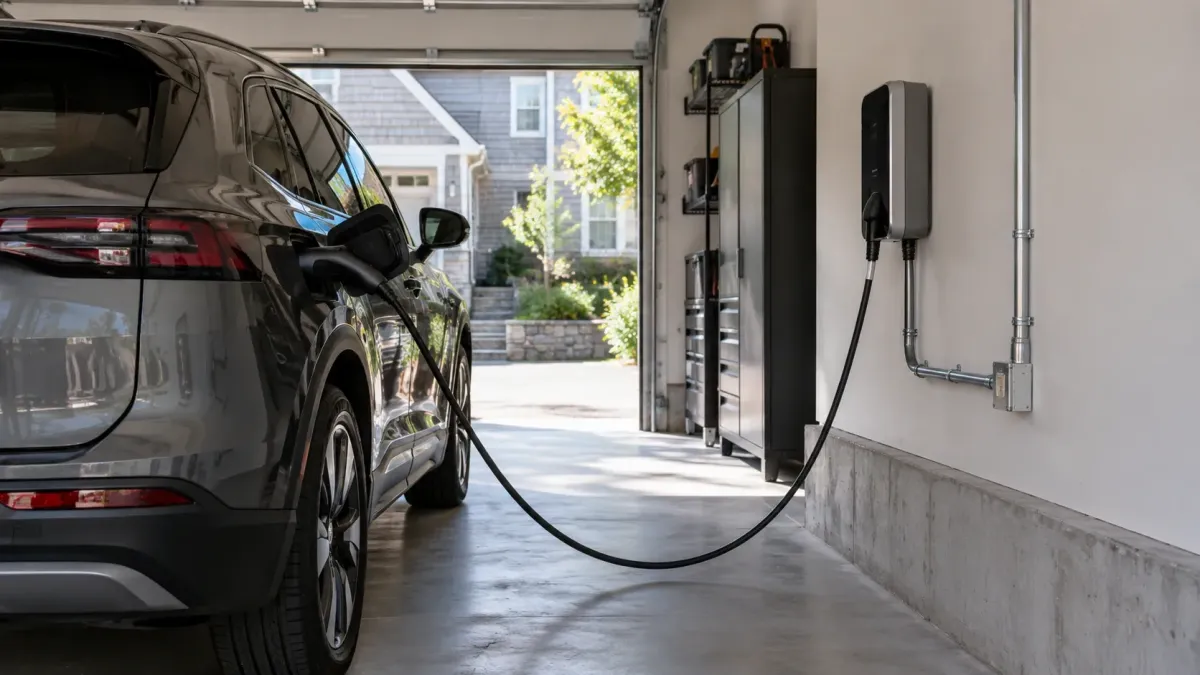
A load study decides how many commercial ports a building can actually carry.
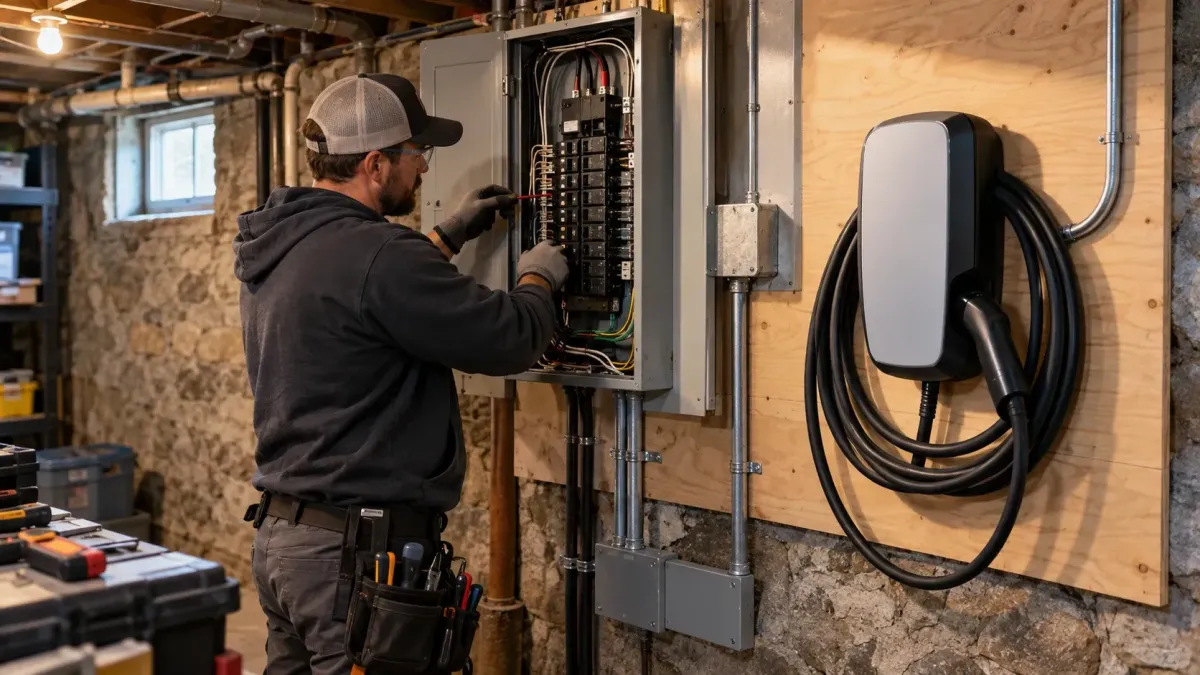
A load calculation decides whether the charger needs new service or a shared circuit.
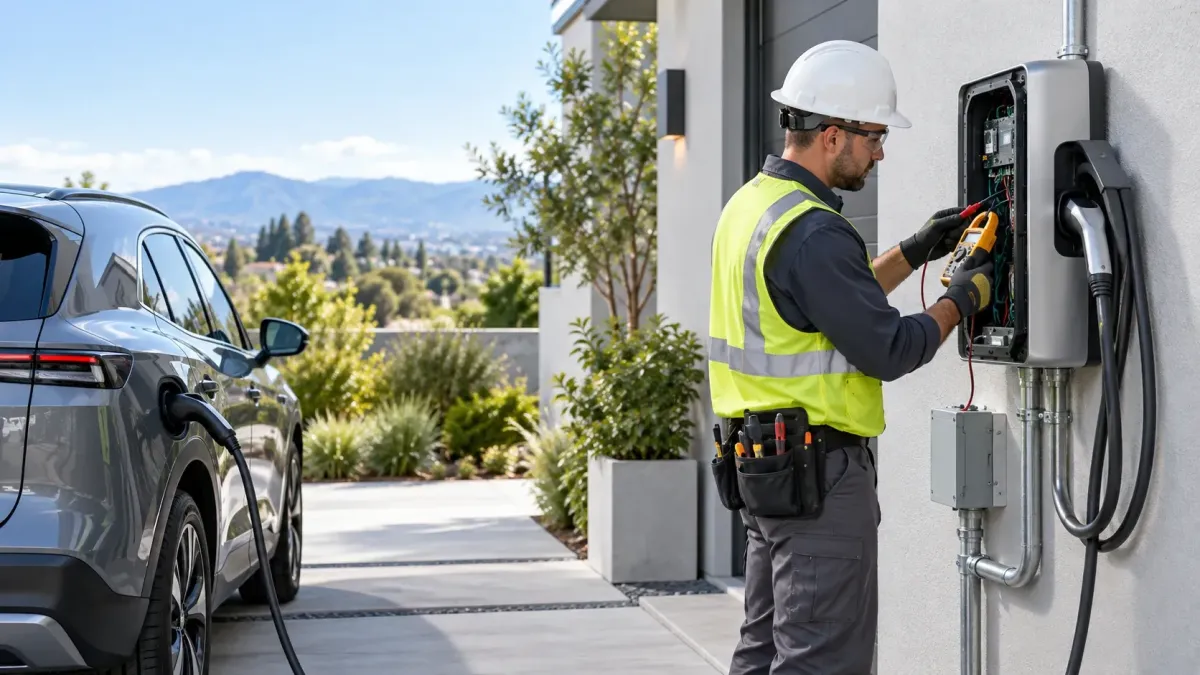
Diagnosis separates a charger fault from a circuit fault before anything gets replaced.
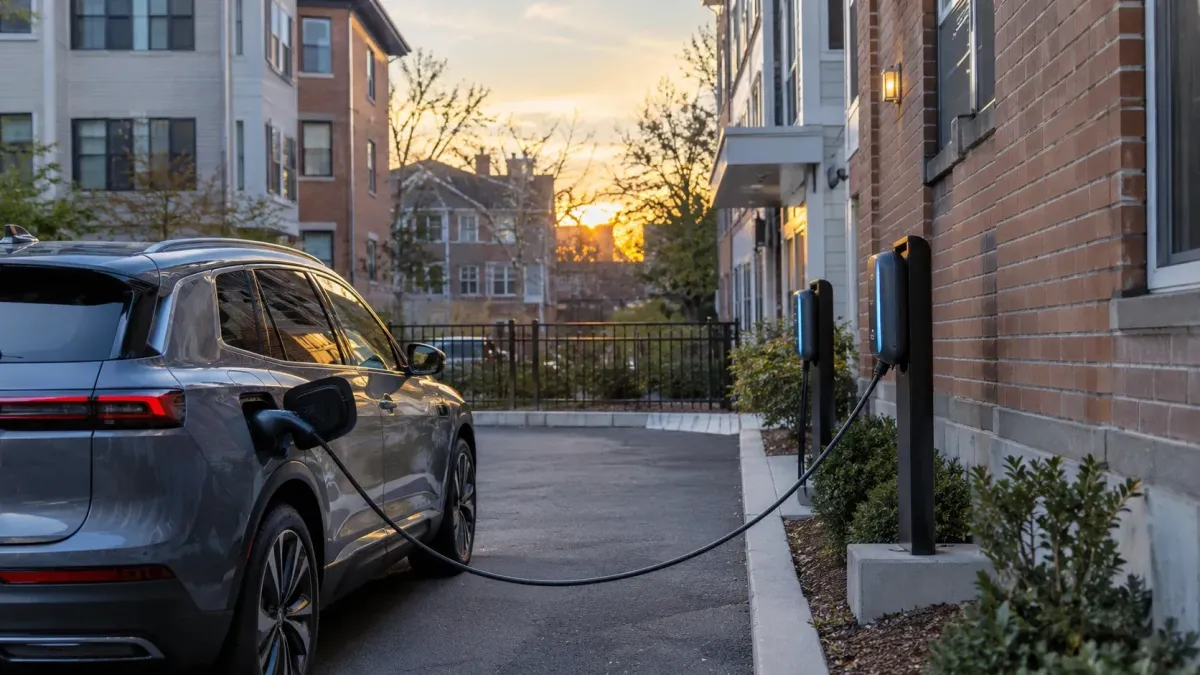
Board approval and metering decide a condo charger install more than the wiring does.
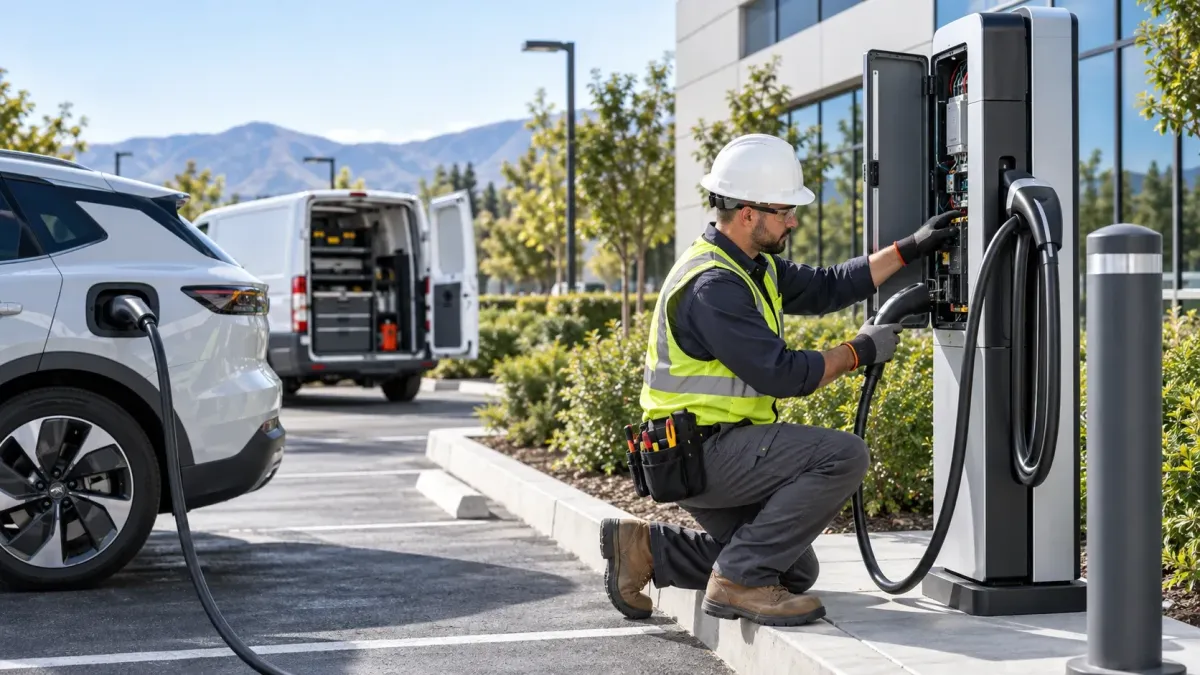
An annual check catches loose terminations and enclosure failures before they cook the connector.
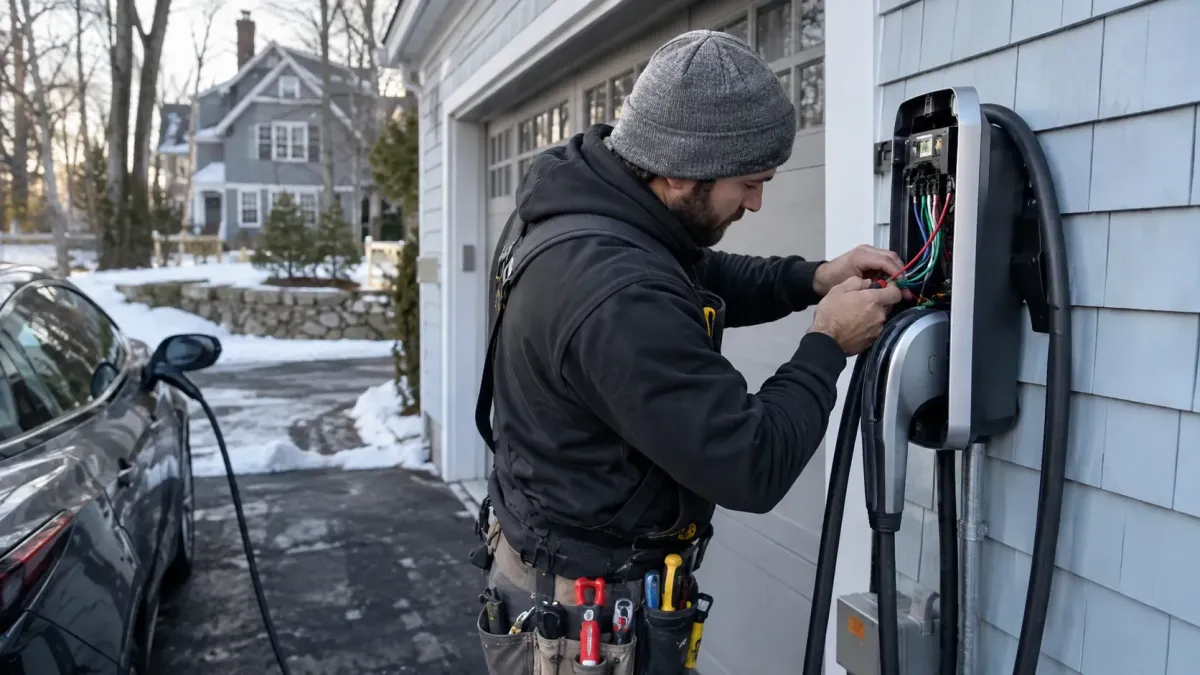
Charger circuits are licensed electrical work, permitted and inspected like any new circuit.
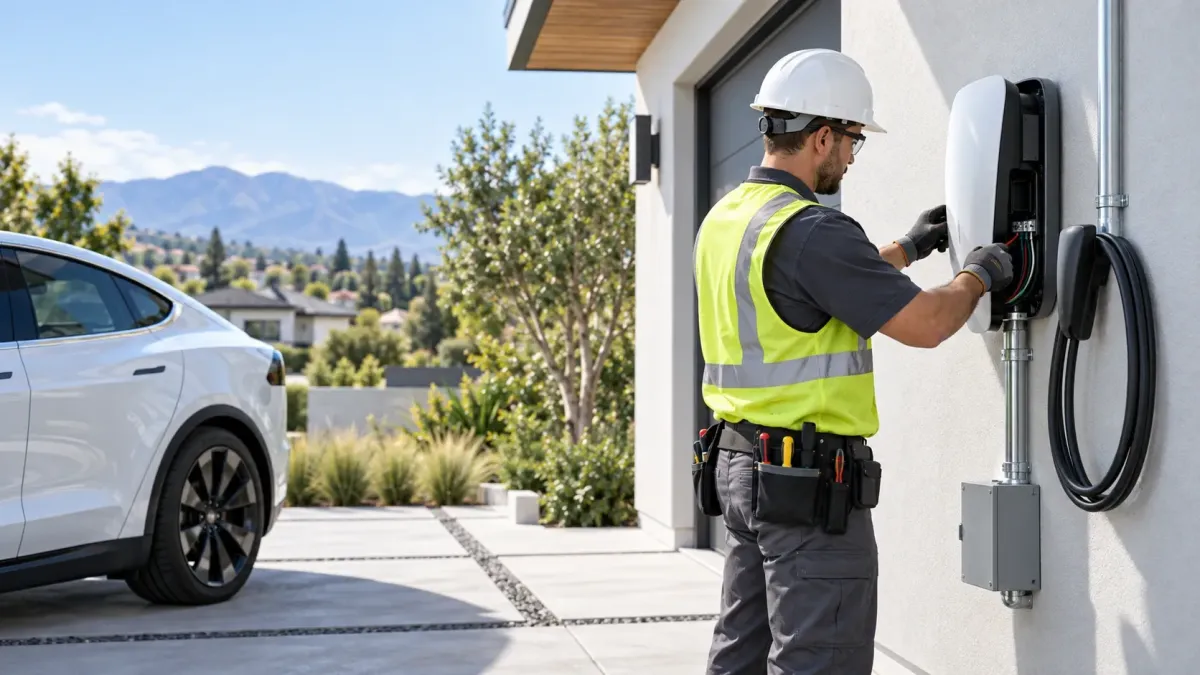
Circuit size and mounting position set how fast a Wall Connector actually charges.
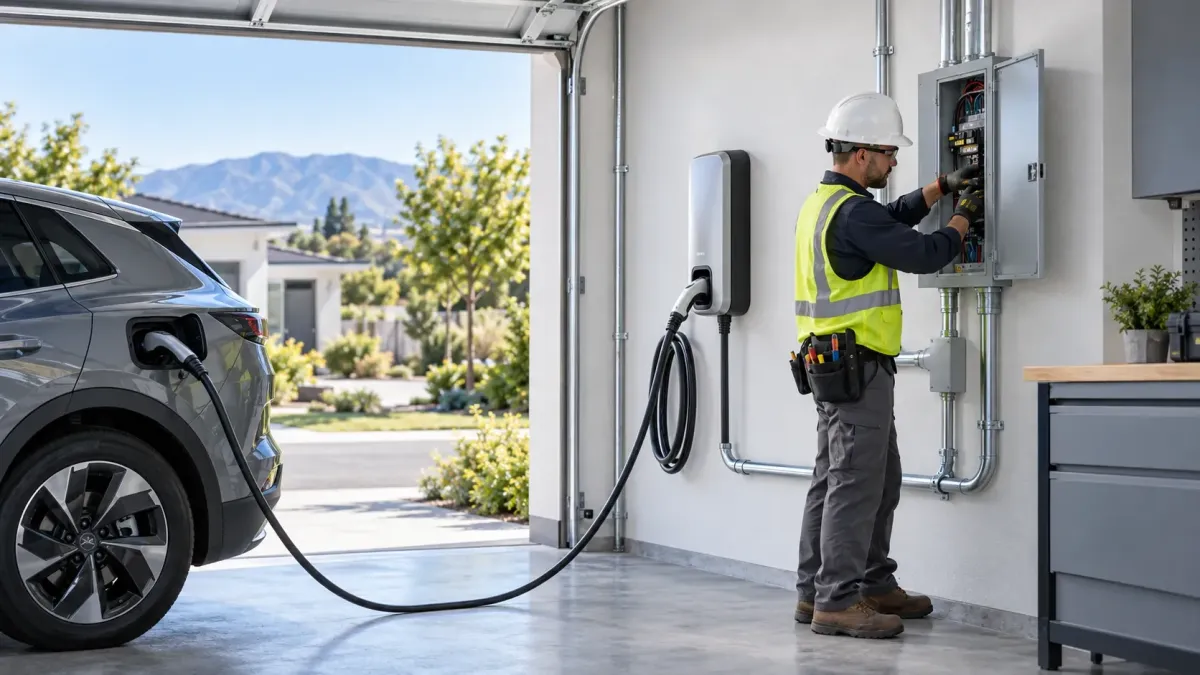
A Level 2 circuit turns overnight parking into a full battery every morning.
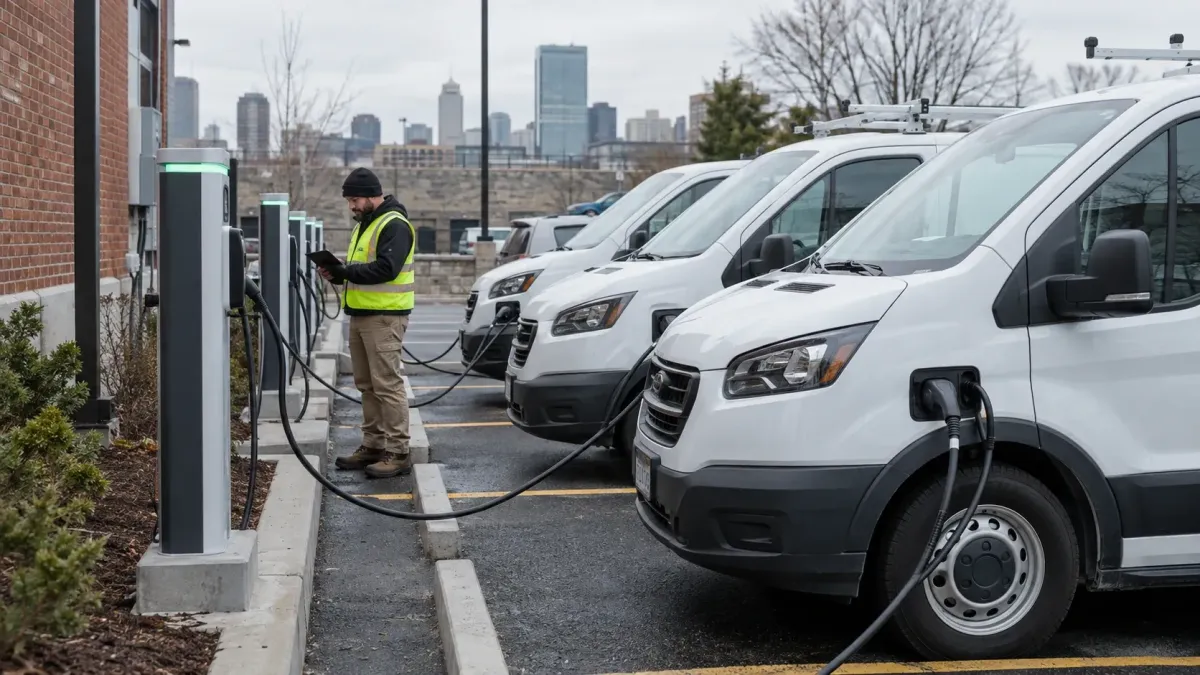
Fleet charging is designed from the duty cycle, not from the number of vehicles.
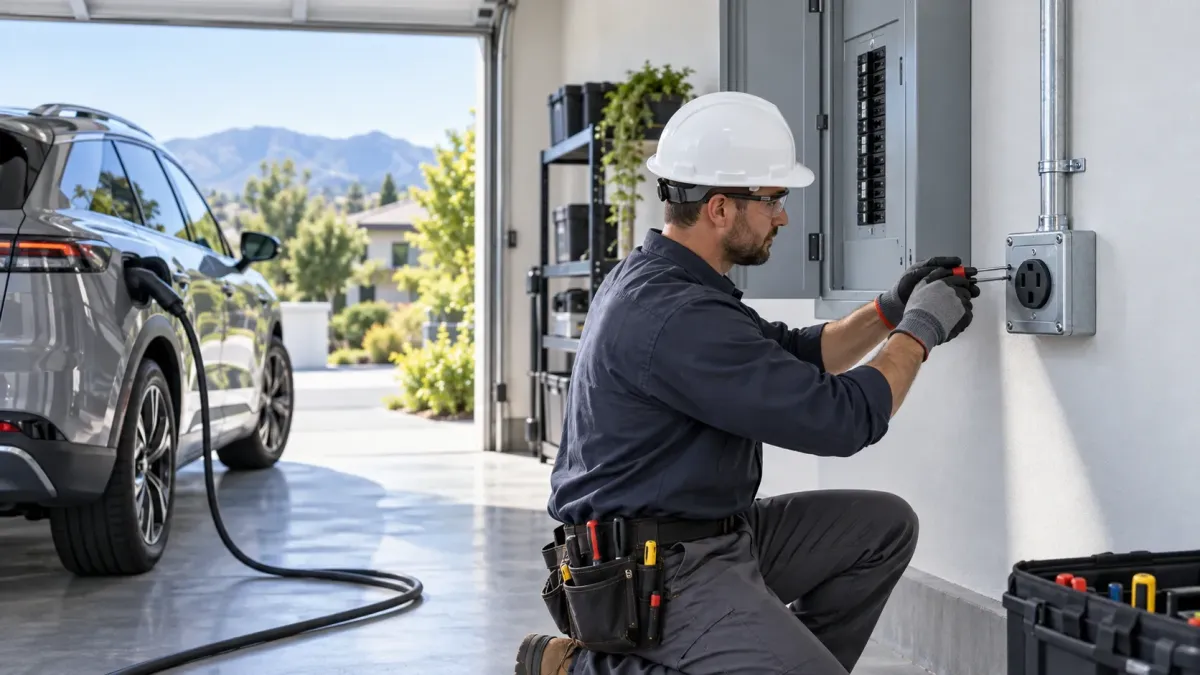
A 240-volt outlet lets a portable charger do most of what a wall unit does.
Where we install across Greater Boston
EV charging installed by licensed Boston electricians
Outside Boston we work in Cambridge, Somerville, Newton, Quincy and Medford. Each one files electrical permits through its own office and sits in its own utility territory, so the rebate route and the inspection timing shift from city to city. We confirm both before the first invoice.
Frequently Asked Questions
EV Charging can be complex, and we’re here to provide answers to common questions. Here are some frequently asked questions from our clients.
Frequently Asked Questions about ev charger installation Boston MA
How much does EV charger installation cost in Boston?
Most Boston home installs land somewhere between roughly $1,700 and $4,000, and the spread is almost entirely about the panel and the distance. A charger mounted beside an existing panel with spare capacity sits at the bottom of that range; a run to a detached garage, or one that needs a panel upgrade first, sits at the top. We price after we have looked at the panel and the parking spot, because a number given before that is not a quote.
Do I need a permit to install an EV charger in Boston?
Yes. A new charger circuit is electrical work, and Massachusetts requires that it be filed with the municipal wiring inspector before it gets energized. We pull the permit under our license and meet the inspector for the rough and final. If an installer offers to skip that step, the circuit never gets inspected and the paperwork you need for a rebate does not exist.
Can my condo association block me from installing an EV charger in Massachusetts?
Not unreasonably. The Massachusetts Right-to-Charge law limits what a condo association can refuse when a unit owner wants a charger at their own parking space, though the association can still set reasonable conditions about routing, metering and insurance. What actually stalls these projects is incomplete paperwork rather than a flat refusal. We prepare the scope drawing, the equipment specification and the electrical detail the board needs to vote on.
Does installing an EV charger require a panel upgrade?
Sometimes, and it comes down to the load calculation rather than the age of the panel. A 100-amp service with electric heat or a large air conditioner often has no room for a 40-amp charger circuit, while another 100-amp house has plenty. We run the calculation during the site visit. Where the load is tight, a load-management device can occasionally solve it for less than a service upgrade would.
What rebates are available for EV charger installation in Massachusetts in 2026?
The state runs MOR-EV, the utilities run charger and make-ready rebates through Mass Save, and MassEVIP grants cover charging at multifamily buildings, workplaces, fleets and public sites. The federal residential charger credit ended on June 30, 2026, so a charger placed in service after that date does not qualify. Amounts and eligibility change, so we confirm what your address and utility actually qualify for before you commit to equipment.
How long does EV charger installation take in Boston?
The wiring on a straightforward residential install is usually a single day. What sets the overall timeline is the permit and inspection sequence, equipment lead time, and any utility work if the service itself has to change. A condo or commercial project adds the approval step ahead of all of that. We give you the sequence in writing, with the inspection date, so you know what is waiting on us and what is waiting on somebody else.
Frequently Asked Questions about EV Charger Maintenance
Does an EV charger really need maintenance?
The electronics largely look after themselves; the connections do not. Terminations loosen with thermal cycling, connectors wear with use, and outdoor enclosures lose their seal. An annual check is a short visit that catches those three, and on a unit that was installed well it usually ends with us telling you nothing needs doing.
How often should a home charger be checked?
Once a year is right for most Boston homes, and once a year is enough. Units mounted outdoors, or in unheated garages that take winter salt and damp, benefit most from that cadence. A unit in a dry attached garage that gets light use can reasonably go longer between visits.
What does an annual charger check include?
Termination torque and thermal condition, enclosure and gasket integrity, connector and cable inspection, delivery testing under load, and a read of the unit's fault log. We finish with a full charge session to confirm it behaves under real conditions rather than just passing a static test.
Do you service chargers at commercial sites?
Yes, on a per-port schedule with uptime reporting. The failure that matters commercially is a port that quietly goes offline and gets reported by a frustrated tenant weeks later. Scheduled checks plus whatever monitoring the hardware supports is what prevents that.
Keep Your Boston Charger on Full Current
What Our Satisfied Clients Have to Say About Boston EV Charging Co.
We pride ourselves on delivering great results and experiences for each client. Hear directly from home and business owners who’ve trusted us with their EV Charging needs.
The Trusted EV Charging Expert Near You
Ready to hear more about expert services at Boston EV Charging Co.?
Contact us today to receive a detailed, no-obligation quote.
Serving Back Bay, Beacon Hill, South Boston, Dorchester, Jamaica Plain, Roslindale & Greater Boston
Mon–Fri 8AM–6PM | Sat 9AM–3PM | Sun Closed


